Interactive transcript · 182 lines
Good morning, everyone.
大家早上好。
Welcome to TalkCast, your daily dose of the world's most fascinating news, tailored for English learners.
欢迎收听 TalkCast,这里为你每天提供世界上最迷人的新闻,专为英语学习者量身打造。
I am Liam.
我是利亚姆。
And I am Zoe.
我是佐伊。
Happy September 24th, 2026 to all of you.
祝大家 2026 年 9月 24 日快乐。
We hope you have a fresh cup of coffee or tea ready because today's stories are absolutely mind -blowing.
我们希望你已经准备好了一杯新鲜的咖啡或茶,因为今天的故事绝对令人震撼。
They certainly are, Zoe.
佐伊,它们确实很震撼。
Today we are taking a journey from the deepest corners of outer space right down to the sandy
今天,我们将踏上一段旅程,从外太空最深的角落一直延伸到铺满沙子的
beaches of California.
加利福尼亚海滩。
Let us start with our headlines.
让我们从头条新闻开始。
Yes, today we look at a groundbreaking cosmic discovery.
是的,今天我们来看一项开创性的宇宙发现。
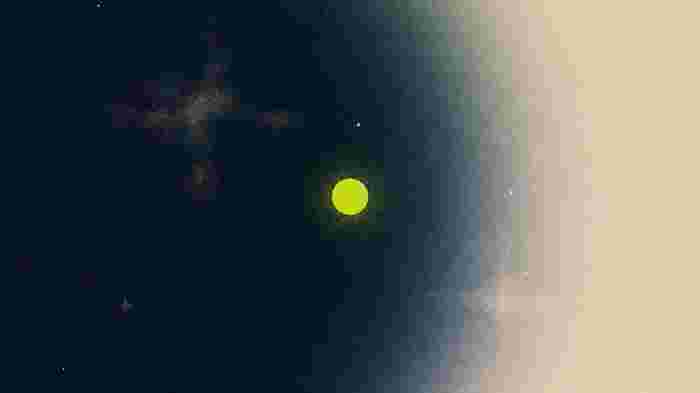
Scientists have picked up radio signals from a planet beyond our solar system.
科学家们接收到了来自太阳系外一颗行星的无线电信号。
Then we will travel back in time as a high school teacher in North Dakota discovers the first -ever
然后我们将穿越回过去,因为北达科他州的一位高中教师发现了有史以来第一个
Tyrannosaurus rex trackway.
霸王龙足迹链。
We will also check out a brand -new crater on the moon, explore how Earth's magnetic field might help
我们还将查看月球上的一个全新陨石坑,探索地球磁场可能如何帮助
slow down aging, and find out why tiny beach critters are secretly moving tons of sand.
减缓衰老,并找出为什么微小的沙滩小生物会在暗中搬运成吨的沙子。
Let us dive into our first story.
让我们深入探讨我们的第一个故事。
For the first time in history, astronomers have detected natural radio waves coming from an exoplanet.
历史上第一次,天文学家检测到了来自系外行星的自然无线电波。
Wait, Liam.
等等,利亚姆。
Radio waves?
无线电波?
Does that mean aliens are trying to contact us or perhaps broadcasting their own radio shows?
这是不是意味着外星人正在尝试联系我们,或者可能在广播他们自己的电台节目?
I knew you would ask that, Zoe.
我就知道你会问那个,佐伊。
But no, it is not aliens.
但并不是,这不是外星人。
The signals are completely natural.
这些信号完全是自然的。
They were detected by a massive telescope in South Africa called Meerkat.
它们是由南非一座被称为 Meerkat 的巨大望远镜探测到的。
The signals are coming from a planet located about 63 light -years away.
这些信号来自一颗位于大约 63 光年之外的行星。
63 light -years?
63 光年?
That sounds incredibly far.
那听起来极其遥远。
But before we get into the science of the signal, could you explain what an exoplanet is?
但在我们深入探讨信号的科学原理之前,你能解释一下什么是系外行星吗?
I know our listeners hear this term a lot in science news.
我知道我们的听众在科学新闻中经常听到这个术语。
Of course.
当然可以。
An exoplanet is simply a planet that orbits a star outside our own solar system.
系外行星简单来说就是一颗在太阳系之外环绕恒星运行的行星。
The prefix exo means outer or external.
前缀 exo 意味着外部或外面的。
So it is a planet orbiting another sun.
所以它是一颗环绕另一颗太阳运行的行星。
Ah, that makes sense.
啊,那很有道理。
And a light -year is the distance that light travels in one year, right?
光年就是光在一年里传播的距离,对吧?
Which is roughly 6 trillion miles. Exactly.
大约是 6 万亿英里。确实如此。
So 63 light -years is a massive distance.
所以 63 光年是一个巨大的距离。
But in the grand scale of the universe, this planet is actually one of our neighbors.
但从宇宙的宏观尺度来看,这颗行星实际上是我们的邻居之一。
So if it is not aliens sending radio messages, what is causing these signals?
那么如果不是外星人发送无线电信息,是什么引起了这些信号?
Scientists believe the radio waves are produced by planetary auroras.
科学家们认为,无线电波是由行星极光产生的。
On Earth, we call these the northern or southern lights.
在地球上,我们称之为北极光或南极光。
Oh, auroras!
噢,极光!
Those beautiful green and purple lights in the sky.
天空里那些美丽的绿色和紫色光芒。
But how do lights make radio signals?
但是光是如何产生无线电信号的呢?
It all comes down to magnetics.
这一切归根结底都与磁学有关。
When charged particles from a star collide with a planet's magnetic field, they accelerate.
当来自恒星的带电粒子与行星的磁场碰撞时,它们会加速。
This acceleration creates both beautiful glowing lights and intense radio waves.
这种加速既创造了美丽发光的光芒,也创造了强烈的无线电波。
By catching these radio waves, astronomers have essentially proven that this exoplanet has a strong
通过捕捉这些无线电波,天文学家基本上证明了这颗系外行星拥有强大的
magnetic field.
磁场。
That is a huge deal.
这是一件巨大的事。
A magnetic field acts like a giant invisible shield, protecting a planet from deadly space radiation.
磁场就像一个巨大的隐形盾牌,保护行星免受致命的太空辐射。
Without it, life as we know it could never survive. Precisely.
没有它,我们所熟知的生命将永远无法存活。正是如此。
This discovery gives scientists a powerful new tool to search for palatable planets.
这一发现为科学家寻找宜居的行星提供了一个强大的新工具。
If a planet has a magnetic shield, it might just be able to support life.
如果一颗行星拥有磁性屏障,它可能就能支持生命。
That is absolutely fascinating.
那绝对太令人着迷了。
Let us hope we find more of these protective shields out there.
希望我们能在外太空找到更多这种保护性的屏障。
Now, let us bring our focus back to Earth, but millions of years in the past.
现在,让我们把焦点拉回到地球,但时间要倒退回数百万年前。
A high school chemistry teacher in North Dakota was out hiking when he made a scientific discovery
北达科他州的一位高中化学老师在徒步旅行时做出了一个科学发现
of a lifetime.
足以改变一生。
Did he find a new chemical element in the rocks?
他是在岩石中发现了新的化学元素吗?
Not quite.
并不完全是这样。
He stumbled upon two giant footprints fossilized in sandstone.
他偶然发现印在砂岩上的两个巨大化石脚印。
When paleontologists returned to the site, they uncovered a total of four footprints.
当古生物学家回到现场时,他们总共发现了四个脚印。
They have now confirmed this is the first ever Tyrannosaurus rex trackway.
他们现在已经确认这是有史以来发现的第一条霸王龙足迹链。
A trackway?
一条足迹链?
How is that different from just finding a single footprint?
这和只发现单个脚印有什么不同呢?
Great question.
这是一个好问题。
A trackway is a continuous sequence of footprints made by the same animal as it walks.
足迹链是同一只动物在行走时留下的连续脚印序列。
While scientists have found single T.
虽然科学家之前发现过单只霸王
rex footprints before, they have never found a clear path showing a T.
龙的脚印,但他们从未找到过一条清晰的路径显示霸王
rex actually taking steps.
龙实际上在迈步。
That is incredible.
那真是太不可思议了。
It is like looking at a snapshot of a walk taken 66 million years ago.
这就像是在看一张6600万年前漫步的快照。
What can scientists learn from a trackway that they cannot learn from bones?
科学家能从足迹链中了解到哪些无法从骨骼中了解到的信息?
Bones show us the structure of the animal, but a trackway shows us its behavior.
骨骼展示了动物的结构,但足迹链展示了它的行为。
By measuring the distance between the footprints, scientists can calculate how fast the dinosaur was moving.
通过测量脚印之间的距离,科学家可以计算出恐龙当时的移动速度。
Oh, let me guess.
哦,让我猜猜。
Was it running at high speeds, chasing down its prey like in the movies?
它当时是在高速奔跑,像电影里那样追捕猎物吗?
Actually, no.
实际上,并不是。
The footprints suggest the T.
这些脚印表明霸王
rex was walking at a very relaxed pace of about three miles per hour.
龙当时正以每小时约三英里的非常轻松的步调行走。
That is roughly the same speed as an average human walking down the street.
这大约与普通人在街上行走的步速相同。
No way.
绝不可能。
A giant, terrifying T.
一只巨大、可怕的霸王
rex just strolling along at human speed?
龙就以人类的速度在漫步?
That is hard to picture.
这很难想象。
It is.
确实如此。
But it proves that these massive predators spent a lot of their time walking slowly to save energy
但这证明了这些巨大的捕食者花费了大量时间慢走以节省能量
rather than running around constantly.
而不是不断地到处奔跑。
That makes sense.
这很有道理。
Even monster dinosaurs had to take it easy sometimes.
即使是怪物般的恐龙有时也得放松一下。
Speaking of giant impacts, let us look up at the night sky.
说到巨大的撞击,让我们抬头看看夜空。
A lunar orbiter has captured images of a brand new crater on the moon.
月球轨道飞行器拍到了月球上一个全新陨石坑的照片。
A new crater?
一个新的陨石坑?
Did a space rock hit the moon recently? Yes.
太空岩石最近撞击了月球吗?是的。
A meteoroid slammed into the lunar surface, leaving a crater that scientists have named Mgechen.
一颗流星体撞击了月球表面,留下了被科学家命名为 Mgechen 的陨石坑。
It is about 50 feet wide, and scientists are calling it a once -in -a -lifetime site.
它大约有50英尺宽,科学家称这是一个千载难逢的遗址。
50 feet wide is pretty big.
50英尺宽相当大了。
But doesn't the moon get hit by rocks all the time?
但是月球不是一直在被岩石撞击吗?
It does.
确实如此。
But most of them are tiny dust particles.
但它们中的大多数都是微小的尘埃微粒。
It is extremely rare for us to capture an impact of this size almost as it happens.
我们几乎在撞击发生的瞬间捕捉到这种规模的撞击,这是极其罕见的。
By comparing older satellite images with new ones, scientists could pinpoint exactly when this fresh
通过对比较旧的卫星图像和新的图像,科学家可以精准地确定这个新鲜的
scar appeared.
痕迹是什么时候出现的。
It must look incredibly bright and clean compared to the older craters.
与较旧的陨石坑相比,它看起来一定非常明亮和干净。
It does.
确实如此。
The fresh lunar soil thrown out by the blast forms bright lines, or rays, extending from the crater.
爆炸喷射出的新鲜月球土壤形成了从陨石坑延伸出来的明亮线条或辐射纹。
But this is also a reminder of the dangers of space. Right.
但这也是对太空危险的一个警示。没错。
Because the moon has no atmosphere to burn up incoming space rocks.
因为月球没有大气层来烧毁飞来的太空陨石。
If we want to build permanent bases there, we are going to need some very strong roofs. Absolutely.
如果我们想在那里建立永久基地,我们就需要一些非常坚固的屋顶。确实如此。
It is a major factor that space agencies are studying right now.
这是航天机构目前正在研究的一个主要因素。
Now, Liam, you mentioned earlier that Earth's magnetic field might have something to do with aging.
现在,利亚姆,你刚才提到地球的磁场可能与衰老有关。
How does that work?
那是怎么运作的?
Is the planet keeping us young?
这颗星球能让我们保持年轻吗?
In a way, yes.
在某种程度上,是的。
A startling new study suggests that Earth's magnetic field plays a key role in how our cells age.
一项令人震惊的新研究表明,地球磁场在我们的细胞如何衰老方面起着关键作用。
Scientists found that when cells are shielded from this magnetic field, they start to decline much faster.
科学家发现,当细胞被屏蔽免受这种磁场影响时,它们开始衰退得更快。
Wait, really?
等等,真的吗?
How does an invisible magnetic force affect our biological bodies?
一种看不见的磁力是如何影响我们的生物体的?
It affects our mitochondria. Mitochondria.
它影响我们的线粒体。线粒体。
I remember this from high school biology.
我记得这是高中生物课学过的。
It is always called the powerhouse of the cell.
它通常被称为细胞的动力源。
Yes, that is the classic metaphor.
是的,那是经典的比喻。
Mitochondria act like tiny batteries inside our cells, generating the chemical energy our bodies
线粒体就像我们细胞内的小电池,产生我们身体
need to function.
所需要去运转的能量。
The study showed that Earth's magnetic field helps these tiny powerhouses run efficiently.
研究表明,地球磁场有助于这些微小的动力源高效运转。
Without the magnetic field, the mitochondria became weak, and the cells began to show signs of rapid aging.
没有磁场,线粒体就会变弱,细胞也开始出现快速衰老的迹象。
That is amazing.
那太神奇了。
So Earth's magnetic field is not just protecting us from outer space radiation, it is actively
所以地球磁场不仅保护我们免受外太空辐射的伤害,它还在积极地
helping our internal batteries run smoothly. Exactly.
帮助我们体内的电池平稳运行。没错。
Researchers believe this connection could lead to new therapies.
研究人员认为,这种联系可能会带来新的疗法。
For example, we might be able to use weak magnetic fields to help treat age -related conditions like
例如,我们也许能够利用微弱的磁场来帮助治疗与年龄相关的疾病,比如
Alzheimer's disease.
阿尔茨海默病。
That is a beautiful thought.
这是一个美好的想法。
It really shows how connected we are to our planet.
这确实表明了我们与我们的星球有着多么紧密的联系。
It really does.
确实如此。
And speaking of being connected to our planet, let us finish today's show with a lighter story from
说到与我们的星球相连,让我们用一个来自...的更轻松的故事来结束今天的节目
the coast of California.
加利福尼亚海岸。
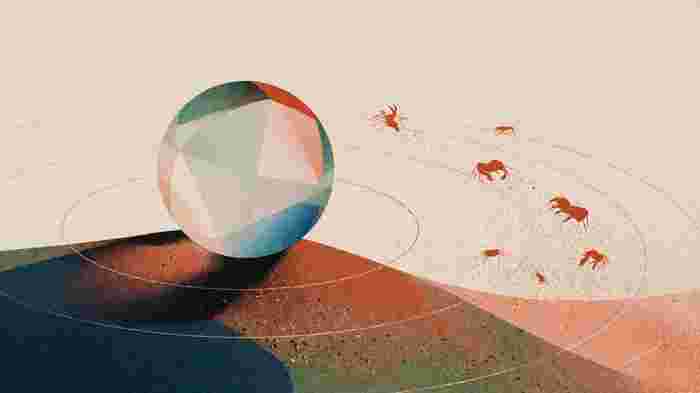
It turns out that some very tiny beach creatures are major landscape builders.
事实证明,一些非常微小的沙滩生物是主要的地貌塑造者。
Are we talking about crabs digging holes?
我们说的是在挖洞的螃蟹吗?
Even smaller.
甚至更小。
We are talking about beach -dwelling crustaceans, often called sandhoppers.
我们说的是居住在沙滩上的甲壳类动物,通常被称为沙跳虾。
They're only about an inch long, but they are incredibly strong. Sandhoppers?
它们只有大约一英寸长,但它们却难以置信地强壮。沙跳虾?
I think I have seen them hopping around seaweed on the beach.
我想我见过它们在沙滩上的海藻周围蹦蹦跳跳。
How can something that small reshape a coastline?
这么小的东西怎么能重塑海岸线呢?
Through hard work.
通过辛勤的劳动。
Scientists discovered that each of these tiny creatures can move more than 10 times its own body
科学家发现,这些微小生物中的每一个都可以移动超过其自身体重10倍的
weight in sand every single day.
沙子重量,而且是每一天。
10 times its own weight?
自身重量的10倍?
If a human did that, it would be like moving a small car with our bare hands every day. Exactly.
如果人类那样做,就相当于每天用我们的赤手空拳去搬动一辆小汽车。确实如此。
And when you multiply that effort by the millions of sandhoppers living along the coasts, they
当你把这种努力乘以生活在海岸边的数百万只沙跳虾时,它们
collectively move tons of sand.
共同移动了数吨的沙子。
In fact, scientists calculated that they move as much sand as some of California's coastal rivers do.
事实上,科学家们计算出它们移动的沙子数量与加利福尼亚州的一些沿海河流一样多。
That is unbelievable.
那真是难以置信。
They are like a tiny invisible army of construction workers keeping the beach healthy.
它们就像一支由建筑工人组成的微型隐形军队,维持着海滩的健康。
They are.
它们确实是。
They dig burrows to stay cool and moist during the day.
它们挖掘洞穴,以便在白天保持凉爽和湿润。
And by doing so, they constantly cycle the sand, which helps keep the beach ecosystem balanced.
通过这样做,它们不断地循环沙子,这有助于保持海滩生态系统的平衡。
I love that.
我喜欢这个。
It is a wonderful reminder that you do not have to be giant like a T -Rex to make a massive
这是一个极好的启示:你不需要像霸王龙那样巨大,也能产生巨大的
difference on this planet.
在这个星球上的影响。
Even the smallest creatures can move mountains, or at least beaches.
即使是最小的生物也能移山,或者至少能移动海滩。
That is a perfect thought to end on, Zoe.
佐伊,这真是一个完美的结语。
And that brings us to the end of our news digest for today.
这就为我们今天的每日新闻摘要画上了句号。
But before you go, we have a fun question for all of our listeners.
但在你们离开之前,我们为所有的听众准备了一个有趣的问题。
If you could travel to one of the places we talked about today, would you choose to visit the
如果你可以旅行到我们今天谈到的其中一个地方,你会选择访问
exoplanet 63 light years away to see its alien auroras?
63光年外的系外行星去观看它的外星极光吗?
Or would you rather visit the prehistoric forest to walk alongside a T -Rex?
还是你宁愿访问史前森林,与霸王龙并肩散步?
Tell us your choice and why in the comment section below.
请在下方的评论区告诉我们你的选择和原因。
We love reading your answers, and it is a great way to practice your English writing.
我们很喜欢阅读你们的答案,这也是练习英语写作的好方法。
You can also see what other listeners have to say.
你也可以看看其他听众是怎么说的。
We would also like to say a huge thank you to everyone for listening.
我们也要对大家的收听表示由衷的感谢。
If you enjoy our show, please consider becoming a Talkcast member, subscribing, and sharing this
如果你喜欢我们的节目,请考虑成为 Talkcast 会员、订阅并分享这期
episode with your friends.
与你的朋友分享这期节目。
Your support helps us keep creating these episodes.
您的支持能帮助我们继续创作这些节目。
And do not forget, you can find the complete English transcript and audio for this episode on our
不要忘记,你可以在我们这里找到本期节目完整的英文文稿和音频
website at www .talkcast .top, and on our official WeChat public account, Talkcast.
就在我们的网站 www.talkcast.top,以及我们的官方微信公众号 Talkcast 上。
We upload these regularly to support your language learning.
我们会定期上传这些内容,以支持您的语言学习。
Thank you again for joining us today.
再次感谢您今天加入我们。
Have a wonderful day ahead, and we will see you next time on Talkcast.
祝您度过美好的一天,我们下次 Talkcast 节目再见。
Goodbye, everyone!
大家再见!