Interactive transcript · 164 lines
Good morning, and welcome to TalkCast, your trusted daily source for clear, engaging news from
早上好,欢迎收听 TalkCast,这是您获取来自全球各地清晰且引人入胜的每日新闻的可靠来源。
around the globe.
在全球各地。
I am Daniel.
我是丹尼尔。
And good morning, I am Emma.
早上好,我是艾玛。
It is October 24th, 2026, and we are so glad you are joining us to kick off your day with a fresh
今天是2026年10月24日,我们非常高兴您能加入我们,以崭新的
cup of curiosity.
一杯好奇心开启新的一天。
We have an incredible lineup of scientific discoveries to brighten your morning.
我们有一系列令人难以置信的科学发现来点亮你的早晨。
Here's a quick look at what is coming up in today's broadcast.
以下是今天广播节目的快速预览。
First, a robotic explorer sets off on an audacious round trip to Mars' mysterious moon, aiming to
首先,一个机器人探测器踏上了一场前往火星神秘卫星的大胆的往返之旅,旨在
bring precious cosmic dirt back to Earth.
将珍贵的宇宙尘埃带回地球。
Next, astronomers spot something long believed to be an optical impossibility, an actual green star
接下来,天文学家发现了一个长期以来被认为在光学上不可能存在的现象,一颗真正的绿色恒星
shining in deep space.
在深邃的太空中闪耀。
Then we will travel back into human prehistory, where ancient proteins have finally revealed the
然后我们将回到人类史前时期,在那里古代蛋白质终于揭示了
true face of our mysterious relatives, the Denisovans.
我们神秘亲戚丹尼索瓦人的真实面目。
We will also look at a clever new method for recycling acrylic glass into pristine new material, and
我们还将探讨一种将有机玻璃回收成崭新新材料的巧妙新方法,并
discover why baby giant manta rays spend their early years close to shore.
发现为什么巨型蝠鲼幼崽在岸边度过它们的早年时光。
There is so much to unpack today, Daniel.
今天有太多内容需要剖析了,丹尼尔。
Where are we heading first?
我们首先前往哪里?
We are heading straight toward Mars.
我们正径直朝火星前进。
Japan has officially launched its groundbreaking Martian moons exploration mission, commonly known
日本已正式发射其开创性的火星卫星探测任务,通常被称为
as MMX.
即MMX。
This ambitious robotic spacecraft is scheduled to travel to Mars, touch down on its largest moon,
这个雄心勃勃的机器人航天器计划前往火星,在其最大的卫星上着陆,
Phobos, collect surface material, and bring those samples back to Earth.
火卫一,收集表面物质,并将这些样本带回地球。
Wait, Daniel.
等等,丹尼尔。
When most people think of Mars, they picture the giant red planet itself.
当大多数人想到火星时,他们想象着那颗巨大的红色星球本身。
It is easy to forget that Mars has two tiny moons, Phobos and Deimos.
人们很容易忘记火星有两颗微小的卫星,火卫一和火卫二。
But why go to the trouble of landing on a moon instead of the main planet?
但为什么要费劲去一颗卫星上着陆,而不是主行星呢?
That is a brilliant question.
这是一个极好的问题。
Planetary scientists have been debating a fundamental riddle for decades.
行星科学家几十年来一直在争论一个根本性的谜题。
Where do these two moons actually come from?
这两颗卫星实际上是从哪里来的?
Are they rogue asteroids captured by the gravitational pull of Mars?
它们是被火星引力捕获的流浪小行星吗?
Or are they fragments of Mars that were blasted into space during a violent cosmic collision
还是它们是在一场剧烈的宇宙碰撞中被炸入太空的火星碎片
billions of years ago? Ah.
数十亿年前?啊。
So Phobos is essentially a celestial time capsule.
所以火卫一本质上是一个天体时间囊。
If it was formed by an ancient impact, its rocks might contain ancient Martian material preserved in
如果它是远古撞击形成的,其岩石可能包含以完好状态保存的远古火星物质
pristine condition. Precisely.
原始状态。确切地说。
Furthermore, landing on Phobos and returning to Earth requires far less fuel than launching from the
此外,在火卫一上着陆并返回地球所需的燃料远少于从
deep gravitational pull of the Martian surface.
火星表面深厚的引力拉力。
The gravity on Phobos is so weak that the spacecraft is practically docking with a floating rock
火卫一上的引力如此之弱,以至于航天器简直是在与一块漂浮的岩石对接
rather than performing a heavy planetary landing.
而不是进行沉重的行星着陆。
That makes complete sense.
这完全说得通。
Instead of fighting intense gravity, the spacecraft can gently touch down, scoop up a few grams of
航天器无需对抗强烈的引力,而是可以轻轻着陆,铲起几克
soil, and embark on its voyage back home.
土壤,并踏上回家的旅程。
Being able to analyze those samples in cutting -edge laboratories on Earth is truly a game -changer.
能够在地球上最先进的实验室里分析这些样本,真是一个颠覆性的改变。
It certainly is.
这当然是。
Now, keeping our eyes on the night sky, our next headline takes us much further out into the cosmos,
现在,让我们将目光投向夜空,下一个头条将带我们更深入地探索宇宙,
where astronomers have detected a celestial object that theoretically should not exist.
那里的天文学家探测到了一个理论上不应该存在的天体。
A green star.
一颗绿色的恒星。
Hold on a second, Daniel.
等一会儿,丹尼尔。
Anyone who has ever flipped through a beginner astronomy book knows that stars come in red, orange,
任何翻阅过初级天文学书籍的人都知道,恒星有红色的、橙色的、
yellow, white, and blue.
黄色、白色和蓝色。
But green stars are supposed to be impossible.
但绿色的星星理应是不可能的。
How can a star actually look green?
一颗星星怎么会实际上看起来是绿色的呢?
You are entirely right according to standard physics.
根据标准物理学,你是完全正确的。
Normally, a star behaves like what physicists call a black -body radiator.
通常情况下,恒星的行为就像物理学家所说的黑体辐射体一样。
In simple terms, stars emit a broad rainbow of light across many wavelengths simultaneously.
简单来说,恒星会同时在许多波长范围内发出广阔的光谱彩虹。
Could you break down that term for us?
你能为我们解释一下那个术语吗?
What does that mean for human eyes?
这对于人眼来说意味着什么?
Think of it like mixing paint on a palette.
把它想象成在调色板上调颜料。
Even when a star's peak emission happens to be in the green part of the light spectrum, it also
即使恒星的峰值辐射恰好位于光谱的绿色部分,它也
pumps out plenty of red and blue light.
会释放出大量的红光和蓝光。
When all those colors enter the human eye at once, our brain blends them together, making the star
当所有这些颜色同时进入人眼时,我们的大脑会将它们混合在一起,使得这颗恒星
look pure white or slightly yellowish, just like our sun.
看起来呈纯白色或略微发黄,就像我们的太阳一样。
So our eyes naturally blend the spectrum into white or yellow.
所以我们的眼睛会自然地将光谱混合成白色或黄色。
How on Earth did this newly discovered star manage to produce a distinct green color?
这颗新发现的恒星到底是怎么产生出明显的绿色呢?
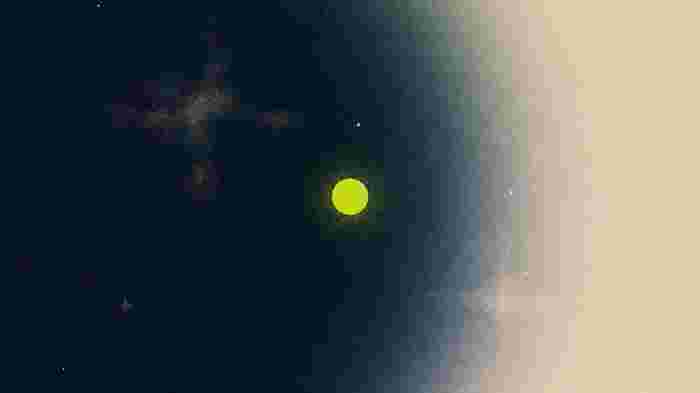
Astronomers discovered a very unusual white dwarf star with a chartreuse greenish hue.
天文学家发现了一颗非常寻常的白矮星,带有黄绿色的色调。
Its bizarre outer atmosphere is packed with rare chemical elements and physical conditions that
其奇异的外层大气中充满了罕见的化学元素和物理条件,
actively absorb and filter out the red and blue ends of the spectrum, allowing only the brilliant
能够积极吸收并过滤掉光谱的红端和蓝端,只允许耀眼的
green wavelengths to escape into space.
绿色波长逃逸到太空中。
A chartreuse star shining in the dark.
一颗黄绿色恒星在黑暗中闪耀。
That sounds like an emerald jewel floating in the galaxy.
这听起来就像是一颗漂浮在星系中的祖母绿宝石。
Nature always seems to find a clever loophole in what we consider the rules of physics.
大自然似乎总能在我们认为的物理规则中找到一个聪明的漏洞。
It really does.
确实如此。
While astronomers are unlocking the secrets of the stars, researchers back on Earth have just solved
正当天文学家们在揭开恒星秘密的同时,地球上的研究人员刚刚解决了一个
a massive mystery about our own ancient family tree.
关于我们自己古老家谱的巨大谜团。
Scientists have published a landmark study in the journal Nature that finally reveals what the
科学家们在《自然》杂志上发表了一项里程碑式的研究,终于揭示了
Dinocevans looked like.
丹尼索瓦人长什么样。
Now that is exciting.
这真是令人兴奋。
We hear a lot about Neanderthals in school, but Dinocevans often remain a shadow.
我们在学校里经常听到关于尼安德特人的消息,但丹尼索瓦人却常常依旧是个谜。
What do we know about them so far?
到目前为止我们对他们了解多少?
The Dinocevans were an ancient group of archaic humans who lived across Asia tens of thousands of
丹尼索瓦人是生活在数万年前亚洲各地的远古人类群体,
years ago.
数万年前。
For over a decade, almost everything we knew about them came from tiny fragments found in a Siberian
在过去的十多年里,我们对他们几乎所有的了解都来自于西伯利亚一个洞穴中发现的微小碎片,
cave, such as a pinky finger bone and a few large teeth.
例如小指指骨和几颗大牙齿。
We had their genetic code, but we had virtually no idea what their faces actually looked like.
我们掌握了他们的基因密码,但对他们的脸实际上长什么样几乎一无所知。
And let me guess.
让我猜猜。
Finding intact skulls with well -preserved DNA in warm climates is extremely rare because DNA breaks
在温暖气候下找到带有保存完好的DNA的完整头骨极其罕见,因为DNA会
down over time. Exactly.
随着时间的推移而分解。正是如此。
But researchers found a brilliant alternative called proteomics.
但研究人员找到了一种绝佳的替代方案,叫做蛋白质组学。
Instead of searching for fragile DNA, they extracted and analyzed ancient structural proteins from
他们没有去寻找脆弱的DNA,而是提取并分析了来自……的古老结构蛋白
fossil bones discovered at the YIA site in northern China. Proteomics?
中国北方YIA遗址发现的化石骨骼。蛋白质组学?
Is that basically using durable proteins like molecular fingerprints when the DNA has completely decayed?
这基本上就像是在DNA完全降解时,利用像分子指纹一样持久的蛋白质吗?
That is a perfect analogy.
这是一个完美的类比。
Proteins survive much longer than DNA.
蛋白质比DNA存活的时间长得多。
By reading the specific amino acid sequences in these ancient bones, the international team
通过读取这些古老骨骼中的特定氨基酸序列,这个国际团队
confirmed that the YIA fossils belong to Denisovans.
确认了YIA化石属于丹尼索瓦人。
This enabled them to piece together their physical anatomy for the very first time.
这使得他们有史以来第一次拼凑出了他们的身体解剖结构。
So, what did our ancient cousins look like?
那么,我们古代的表亲长什么样呢?
They had remarkably broad skulls, extremely large brain capacities, and robust jaws with very broad teeth.
他们有着异常宽阔的头骨、极大的脑容量,以及非常宽大且强健的下颌。
These strong physical features likely helped them endure severe ice age climates and chew tough,
这些强健的身体特征可能帮助他们经受严酷的冰河时代气候,并咀嚼坚韧的……
fibrous diets.
纤维质饮食。
It is fascinating to put a face to a name that has puzzled anthropologists for years.
能把多年来一直困惑人类学家的名字和面孔对应起来,真是令人着迷。
And remember, many modern human populations, especially in Asia and Oceania, still carry Denisovan
请记住,许多现代人类群体,特别是亚洲和大洋洲的人群,仍然携带
genes that help with high -altitude survival and immune defense.
有助于高海拔生存和免疫防御的基因。
In a way, a piece of them still lives inside us today.
从某种意义上说,它们的一部分今天仍然活在我们体内。
Indeed, human evolution is a rich, interwoven story.
的确,人类的进化是一个丰富而交织的故事。
Moving from ancient history to modern sustainability, scientists have unveiled a low -energy method
从古代历史转向现代可持续发展,科学家们公布了一种低能耗的方法
to recycle acrylic glass into brand -new material.
将亚克力玻璃回收制成全新的材料。
Acrylic glass is everywhere in modern life, right?
亚克力玻璃在现代生活中随处可见,对吧?
We see it in aquarium walls, protective screens, car headlights, and architectural panels.
我们在水族馆的墙壁、保护屏、汽车大灯和建筑面板中都能看到它。
But why has recycling it been such a headache?
但为什么回收它一直是件令人头疼的难题呢?
Traditionally, recycling acrylic requires intense thermal energy.
传统上,回收丙烯酸需要大量的热能。
Melting it down typically ruins its transparency and weakens the polymer chains, resulting in
将其融化通常会破坏其透明度并削弱聚合物链,导致
cloudy, low -value plastic.
浑浊的、低价值的塑料。
Because of that, most acrylic waste ends up discarded in landfills.
正因为如此,大部分亚克力废料最终都被扔进了垃圾填埋场。
Nobody wants an aquarium or a cockpit window that looks cloudy and brittle.
没有人希望水族馆或驾驶舱窗户看起来又混浊又易碎。
How does this new method fix that problem?
这种新方法是如何解决这个问题的呢?
The research team developed a gentle chemical process known as catalytic depolymerization.
研究团队开发了一种温和的化学过程,被称为催化解聚。
Under relatively mild temperatures, a specialized catalyst unzips the long polymer chains back into
在相对温和的温度下,一种特殊的催化剂将长聚合物链解开,重新变回
their original liquid building blocks called monomers.
它们最初被称为单体的液体构建块。
Think of it like dismantling a complex Lego tower, brick by individual brick, rather than crushing
这就像是拆卸一座复杂的乐高塔,一块一块地拆,而不是砸碎
the whole structure.
整个结构。
Once you have the individual bricks clean and intact, you can snap them back together to build
一旦你把单个积木清理干净且完好无损,你就可以把它们重新拼装起来
something completely fresh.
造出完全崭新的东西。
Spot on, Emma.
说得很准,埃玛。
The recovered liquid monomer has a purity rate exceeding 90%, meaning manufacturers can make crystal
回收的液体单体纯度超过90%,这意味着制造商可以制造水晶般
-clear, virgin -grade acrylic glass without burning extra fossil fuels.
清晰、原生级的亚克力玻璃,而无需燃烧额外的化石燃料。
It is a major step forward for the circular economy.
这是循环经济向前迈出的重要一步。
That kind of practical innovation gives me genuine hope for reducing industrial waste.
这种切实的创新让我对减少工业废料产生了真正的希望。
Speaking of protecting our planet, Daniel, our final story today takes us into the ocean with some
说到保护我们的星球,丹尼尔,我们今天的最后一个故事将带我们进入海洋,去了解一些
surprisingly cautious marine giants.
令人惊讶的谨慎的海洋庞然大物。
That is right.
说得没错。
A comprehensive marine tracking study published this week has shed new light on the mysterious
本周发表的一项全面的海洋追踪研究对神秘的
childhood of giant manta rays.
巨型蝠鲼的童年
Adult manta rays are known as majestic wanderers, boasting wingspans of up to 7 meters and traveling
成年蝠鲼被称为雄伟的漫游者,拥有高达7米的翼展,并在
thousands of miles across open seas.
公海中跨越数千英里。
A 7 -meter wingspan is nearly the size of a city bus.
7米宽的翼展几乎和城市公交车一样大。
But newborn manta rays obviously cannot start out that large.
但是初生的蝠鲼显然不可能一开始就那么大。
Where do the youngsters hang out?
这些幼崽都在哪里活动呢?
Marine biologists discovered that juvenile manta rays deliberately stay close to home.
海洋生物学家发现,幼年蝠鲼会刻意留在离家不远的地方。
For the first few years of their lives, they remain within sheltered, shallow coastal lagoons and
在生命的前几年里,它们呆在受庇护的、浅浅的沿海泻湖中
coral reefs, rarely venturing out into deep, open water.
以及珊瑚礁中,很少冒险去深邃的开阔水域。
It is essentially an ocean nursery.
这本质上就是一个海洋托儿所。
Out in the open ocean, young rays would be easy targets for hungry tiger sharks and killer whales.
在开阔的海洋中,小蝠鲼很容易成为饥饿的虎鲨和虎鲸的攻击目标。
Hugging the shallow coastline keeps them well -fed on plankton while staying out of harm's way. Exactly.
紧贴着浅浅的海岸线可以让他们靠浮游生物吃饱,同时又能避开危险。确实如此。
The researchers emphasize that this behavior carries critical conservation implications.
研究人员强调,这种行为具有重大的保护意义。
If coastal habitats, mangroves, and shallow reefs are damaged by coastal development or pollution,
如果沿海栖息地、红树林和浅海礁石遭到沿海开发或污染的破坏
entire generations of baby manta rays lose their protective haven before they ever reach adulthood.
整代的小蝠鲼在成年之前就会失去它们的保护港湾。
That reminds us that protecting open ocean wildlife often starts right at the water's edge.
这提醒我们,保护远洋野生动物通常从水边就开始了。
Even the most majestic giants of the sea need a quiet, safe neighborhood while growing up.
即使是海洋中最雄伟的庞然大物,在成长过程中也需要一个安静、安全的栖息环境。
A wonderful reminder of how delicate and interconnected our living world is.
这是一个美妙的提醒,让我们看到我们赖以生存的世界是多么脆弱而又紧密相连。
From robotic voyages to Martian moons to chartreuse stars and ancient human cousins, science
从机器人对火星卫星的探索,到黄绿色的恒星,再到远古的人类表亲,科学
continues to expand our horizons every single morning.
在每一个清晨,持续不断地拓展我们的视野。
It certainly does, Daniel.
丹尼尔,这确实如此。
And that brings us to the end of this morning's News Digest.
这也让我们迎来了今天早晨新闻摘要的尾声。
Before you head out into your day, here is a thought -provoking question to ponder.
在你开始新的一天之前,这里有一个引人深思的问题供你思考。
If you could hop into a time -traveling spacecraft right now, would you rather journey into deep
如果你现在能跳进一艘时间旅行的飞船,你是否愿意深入
space to witness that rare green star up close, or travel 50 ,000 years into the past to meet a
太空去近距离见证那颗罕见的绿色恒星,或者回到五万年前去
Denisovan in person?
亲眼见见丹尼索瓦人吗?
That is a tough choice between cosmic wonders and our own origins.
这是宇宙奇观与我们自身起源之间的一个艰难抉择。
Whatever your answer, keep your curiosity alive today.
无论你的答案是什么,今天都要保持你的好奇心。
Thank you for listening to TalkCast.
感谢您收听 TalkCast。
Have a fantastic morning, stay safe, and we will talk to you tomorrow.
祝您有一个美妙的早晨,注意安全,我们明天再聊。
Have a wonderful day, everyone. Goodbye.
祝大家过个美好的一天。再见。