Interactive transcript · 246 lines
Hello, hello, everyone.
哈啰,哈啰,大家好。
Welcome back to TalkCastSpeaking, your favorite spot for leveling up your spoken English in the most
欢迎回到 TalkCastSpeaking,这是你最喜欢的提升英语口语的宝地,以最
fun and natural way possible.
有趣且自然的方式。
I'm your host, Sarah, and I am absolutely thrilled to have you here today.
我是主持人 Sarah,今天能邀请到大家我真的非常激动。
Now, let me ask you a question.
现在,让我问大家一个问题。
Have you ever found yourself staying up way too late because a TV show was just too good to put down?
你有没有发现自己因为一部电视剧太好看而熬夜到很晚?
You one more episode, you tell yourself, and suddenly it's three in the morning.
你告诉自己再看一集,突然间就凌晨三点了。
Well, that is exactly what we are diving into today.
嗯,这正是我们今天准备深入探讨的话题。
We are going to learn how to talk about TV show plots, our favorite characters, and yes, even those
我们将学习如何讨论电视剧情节、我们最喜爱的角色,是的,甚至还有那些
annoying VIP paywalls that keep us from watching the latest episodes.
阻止我们观看最新剧集的令人讨厌的 VIP 付费墙。
And to help me explore this highly entertaining topic, I'm joined by our wonderful guest today.
为了帮助我探索这个非常有娱乐性的话题,今天我们邀请到了一位棒极了的嘉宾。
Let's give a warm welcome to Kevin.
让我们热烈欢迎凯文。
Hi, Kevin.
嗨,凯文。
Hi, Sarah.
嗨,莎拉。
Hello, everyone.
你好,大家。
Oh, my goodness, Sarah.
哦,天哪,莎拉。
You literally described my entire last night.
你简直描述了我昨晚的全部经历。
I am so tired today, but I'm also super excited to be here on TalkCastSpeaking.
我今天太累了,但能来到 TalkCastSpeaking 我也感到超级兴奋。
I had a feeling.
我有种预感。
You look like you've been staring at a screen for a bit too long.
你看起来就像是盯着屏幕看了太久。
So tell our listeners what kept you up last night.
快告诉我们的听众,昨晚是什么让你彻夜难眠。
Well, I saw a new drama yesterday.
嗯,我昨天看了一部新剧。
It was so good.
太棒了。
I saw it all night from episode one to episode 10.
我通宵从第一集看到了第十集。
I just couldn't stop.
我就是停不下来。
Ooh, I love the enthusiasm, Kevin.
哦,我喜欢这种热情,凯文。
But before we go any further, this is actually the perfect teaching moment for our listeners.
但在我们深入探讨之前,这实际上是给听众们的完美教学时刻。
You said, I saw a new drama, and I saw it all night.
你说,我看了一部新剧,而且我看了一整晚。
While we do use the verb see for movies sometimes, like I saw a movie at the cinema, when we talk
虽然我们有时确实会在看电影时使用动词 see,比如我在电影院看电影,但当我们谈论
about TV series at home, we almost always use watch.
在家看的电视剧时,我们几乎总是使用 watch。
But even better, there's a highly colloquial, super common word for watching many episodes of a show
但更好的是,有一个非常口语化、超级常见的词来形容看许多集剧
in a very short time.
在极其短的时间内。
Do you know what it is?
你知道是什么词吗?
Oh, is it binge watch?
哦,是刷剧吗?
Thought on. Brilliant.
完全正确。太棒了。
Binge watch.
刷剧。
The word binge means doing too much of something in a short period.
binge 这个词的意思是在很短的时期内过度做某事。
So binge watching means watching episode after episode.
所以 binge watching 意思是一集接一集地不停看。
Let's practice the pronunciation together.
让我们一起练习发音。
It's binge watch.
就是刷剧。
The G makes a just sound like in orange.
字母 G 的发音就像 orange 中的 G 一样。
Try saying, I binged the whole season last night.
试着说:我昨晚刷完了整季。
Let me try.
让我试试。
I binged the whole season last night.
我昨晚刷完了整季。
Wow, that feels much more native -like. Perfect.
哇,这感觉更地道了。完美。
You nailed the pronunciation of binged as binged.
你完美搞定了 binged 的发音。
Now, why were you so obsessed with this show?
现在,为什么你对这部剧这么着迷?
What was it about?
它是关于什么的?
The story is amazing.
故事非常精彩。
There is a detective and he is trying to find a bad guy, but the bad guy is actually his brother.
剧中有一个侦探,他试图抓一个坏人,但坏人实际上是他的哥哥。
The story?
这个故事?
What is the word for story in a movie or show?
在电影或剧集中,表达“故事”的词是什么?
Ah, great question.
啊,好问题。
The general word we use for the storyline of a book, movie, or show is plot.
我们用来指代书、电影或剧集故事情节的通用词是情节。
P -L -O -T.
P-L-O-T。
So you can say the plot is really exciting.
所以你可以说情节非常精彩。
And when the plot has a sudden, unexpected change, like the bad guy turning out to be the
而当情节发生突然的、意想不到的变化时,比如坏人结果竟然是……
detective's brother, we call that a plot twist.
侦探的兄弟,我们称之为情节反转。
Oh, plot twist.
哦,情节反转。
I love that.
我喜欢那个。
Yes, there was a massive plot twist at the end of episode five.
是的,在第五集结尾有一个巨大的情节反转。
I was shocked. Exactly.
我被震惊了。完全没错。
Plot twist is a must -know term.
“情节反转”是一个必备术语。
And when an episode ends right at a highly suspenseful moment, leaving you desperate to know what
而当一集恰好在极具悬念的时刻结束,让你急切地想知道……
happens next, we call that a cliffhanger.
接下来会发生什么,我们称之为悬念式结尾。
Think of it literally like a character hanging off a cliff and the episode just cuts to black.
你可以字面上理解为,就像一个角色悬挂在悬崖边,然后画面直接黑屏。
Ah, cliffhanger.
啊,悬念式结尾。
That is a perfect word.
那真是个完美的词。
Every single episode ended on a cliffhanger.
每一集都以悬念结尾。
That's why I was hooked.
这就是为什么我被吸引住了。
Yes, hooked is another fabulous word.
是的,hooked 是另一个极好的词。
I'm hooked on this show means you are totally addicted to it, like a fish on a hook.
“我迷上了这部剧”意味着你对它完全上瘾了,就像上钩的鱼一样。
Listeners, notice how Kevin linked those words, hooked on.
听众们,注意凯文是如何连读这些词的,hooked on。
We connect the D sound at the end of hooked to the O in on, hooked on.
我们将 hooked 结尾的 D 音与 on 中的 O 音连接起来,hooked on。
Try saying that, Kevin.
试着说一下,凯文。
I'm hooked on this show.
我迷上了这部剧。
That makes it sound so smooth.
那让它听起来非常流畅。
But Sarah, I have a big problem.
但是萨拉,我有很大的问题。
I wanted to watch episode 11, but I couldn't. Oh?
我想看第 11 集,但我看不了。哦?
Why is that?
为什么会这样?
Did you run out of time?
你是没时间了吗?
No, I had time.
不,我有时间。
But the platform said I must pay extra money to watch the latest episodes, even though I am already
但是平台说我必须支付额外的费用才能观看最新的剧集,即使我已经……
a VIP member.
是 VIP 会员。
They call it…
他们称它为……
wait, how do we say 超前点播 or付费地索 in English?
等等,用英语怎么说“超前点播”或“付费解锁”?
Ah, yes.
啊,是的。
This is a huge trend now, and it can be so frustrating.
这现在是一个巨大的趋势,而且真的很令人沮丧。
In English -speaking countries, when content is locked behind an extra payment screen, we say it is
在英语国家,当内容被锁定在额外付费页面之后时,我们会说它是……
behind a paywall.
在付费墙之后。
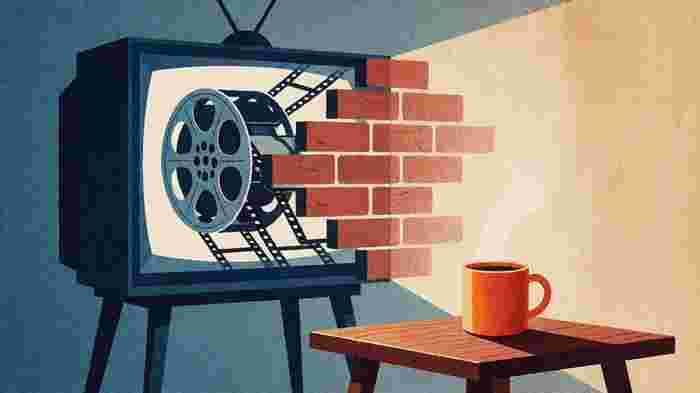
A paywall is like a digital wall that requires payment to cross.
付费墙就像一面数字墙,需要付费才能跨越。
For the specific practice of paying to watch episodes early, we often call it VIP early access or
对于为了提前看剧而付费的具体做法,我们通常称之为 VIP 抢先看或……
fast track access.
快速通道权限。
Sometimes we just say they put the episodes behind a paywall.
有时我们只是说他们把剧集放在了付费墙后面。
A paywall.
一个付费墙。
That makes total sense.
那完全说得通。
A wall made of payments.
由支付构成的墙。
So I can say the season finale is behind a paywall. Precisely.
所以可以说季终集在付费墙后面。正是如此。
The season finale is behind a paywall.
季终集在付费墙后面。
And season finale is another great term.
而且季终集是另一个很棒的术语。
It means the very last episode of a season.
这意味着一季中的最后一集。
If it's the end of the entire show forever, we call it the series finale.
如果是整部剧永久的终结,我们称之为全剧终章。
Oh, so season finale for the year and series finale for the whole show.
哦,所以季终集针对这一年,全剧终章针对整部剧。
Got it.
明白了。
Well, the season finale is behind a paywall, and I refuse to pay more.
好吧,季终集在付费墙后面,我拒绝支付更多费用。
But my friend paid for it, and today at lunch, he wanted to tell me what happened.
但我朋友付了费,今天吃午饭时,他想告诉我发生了什么。
I was so angry.
我太生气了。
I told him, don't spoil me.
我告诉他,别对我剧透。
Oh, Kevin, I feel your pain.
哦,凯文,我能体会你的痛苦。
There is nothing worse than that.
没有比那更糟糕的了。
But let's look at your sentence.
但让我们来看看你的句子。
Don't spoil me.
别剧透我。
This is a very common mistake for Chinese learners.
对于中文学习者来说,这是一个非常常见的错误。
In Chinese, you say, don't spoil me.
在中文里,你会说“别剧透我”。
But in English, the verb spoil means to ruin something.
但在英语中,动词 spoil 的意思是毁掉某事。
We don't spoil people with information.
我们不会用信息去干扰别人。
We spoil the plot or the ending for someone.
我们会破坏某人的剧情或结局。
So the correct way to say this is, don't spoil it for me or no spoilers, please.
所以正确的说法是,别对我剧透,或者请不要剧透。
Ah, so I shouldn't say don't spoil me.
啊,所以我不应该说别剧透我。
I should say don't spoil the ending for me or no spoilers, please.
我应该说别把结局透露给我,或者请不要剧透。
Is that right? Exactly.
是对的吗?完全正确。
You got it.
你理解了。
Let's break down why.
让我们来拆解一下原因。
If you say, don't spoil me, it actually sounds like you are asking someone not to treat you too well
如果你说 don't spoil me,实际上听起来就像你在要求别人不要对你太好
with gifts or pampering, like a spoiled child.
送礼或娇惯,就像一个被宠坏的孩子。
So if you want to protect your TV viewing experience, always say, no spoilers, or don't ruin the
所以如果你想保护你的看剧体验,一定要说不要剧透,或者不要毁掉
ending for me.
对我的结局体验。
In fact, before people talk about a show online, they usually write spoiler alert as a warning.
事实上,人们在网上讨论一部剧之前,通常会写上“剧透警报”作为警告。
Oh, I see spoiler alert on YouTube all the time.
哦,我一直在 YouTube 上看到剧透警报。
Now I know what it means.
现在我知道它是什么意思了。
It's like a warning sign saying stop reading if you haven't watched it yet. Exactly.
这就像一个警告标志,上面写着如果你还没看过就停止阅读。一点没错。
It's an act of modern courtesy.
这是现代礼节的一种体现。
Now, Kevin, let's put this into practice with a little roleplay.
现在,凯文,让我们通过一个小角色扮演来进行实践。
Imagine we are at work grabbing a cup of coffee.
想象一下我们在工作时去买杯咖啡。
I've watched the latest episode behind the paywall and you haven't.
我已经看了付费墙后的最新一集,而你还没有。
Let's see how you handle it. Ready?
让我们看看你如何处理它。准备好了吗?
Oh, I'm ready.
哦,我准备好了。
Let's do it.
让我们开始吧。
Hey, Kevin, did you watch the new episode of The Detective last night?
嘿,凯文,你昨晚看《神探》的新一集了吗?
Oh my gosh, that ending.
天哪,那个结局。
I can't believe who the killer actually is.
我不敢相信凶手居然是他。
Wait, wait, stop right there, Sarah.
等等,等等,就停在那里,莎拉。
Spoiler alert.
剧透警报。
Don't spoil it for me.
别对我剧透。
I haven't watched it yet because it's behind a paywall and I'm waiting for it to become free next week.
我还没看,因为有付费限制,我正等着它下周变成免费。
Oh, oops, my bad.
哦,糟糕,我的错。
I promise my lips are sealed.
我保证我的嘴唇是封住的(绝对守口如瓶)。
But let me tell you, when you finally watch it, your mind will be blown.
但让我告诉你,当你终于看到它时,你会大受震撼。
The character development in this season is just incredible.
这一季的人物塑造真是不可思议。
Phew, thank you.
呼,谢谢你。
Wait, you said character development.
等等,你说到了角色塑造。
What does that mean exactly?
那究竟是什么意思?
That's a fantastic question.
这是一个绝妙的问题。
Character development refers to how a character changes, grows, or reveals different sides of their
角色塑造指的是一个角色如何改变、成长,或者展现出其
personality over the course of a story.
在故事发展过程中的不同性格侧面。
For example, a character might start out very selfish, but through different challenges, they
例如,一个角色刚开始可能非常自私,但通过不同的挑战,他们
develop into a hero.
成长为一名英雄。
We say they have great character development.
我们会说这个角色有着出色的塑造。
On the other hand, if a character stays flat and boring, we might say there is no character
另一方面,如果一个角色保持扁平且无趣,我们可能会说没有任何角色
development at all.
塑造可言。
Ah, I see.
啊,我明白了。
In my show, the detective starts out very cold, but then we see he cares a lot about his family.
在我看剧里,那个侦探一开始非常冷酷,但后来我们看到他非常关心他的家人。
So that is good character development.
所以那就是很好的角色塑造。
Spot on, Kevin.
完全正确,凯文。
You are a natural at this.
你在这方面真是个奇才。
Now, let's talk about how to express your feelings about a show.
现在,让我们聊聊如何表达你对一部剧的感受。
Besides saying it is good, what other words can we use to describe a really captivating show?
除了说它好之外,我们还可以用哪些词来形容一部真正迷人的剧?
Hmm, maybe exciting or interesting?
嗯,也许是令人兴奋的还是有趣的?
Those are good, but a bit basic.
那些词都不错,但有点基础。
If a show is so exciting that it completely holds your attention, you can say it is gripping.
如果一部剧精彩到能完全吸引你的注意力,你可以说它是扣人心弦的。
G -R -I -P -P -P -I -N -G.
G-R-I-P-P-P-I-N-G。
Like it is physically gripping your mind.
就好像它在实质上抓住了你的心灵。
Or you can say it's a must -watch.
或者你可以说它是一部必看之作。
For example, the new season of Sherlock is a must -watch.
例如,《神探夏洛克》的新一季就是一部必看之作。
Ooh, gripping and a must -watch.
哦,扣人心弦和必看之作。
I like those.
我喜欢这几个词。
Let me try.
让我试试。
This detective drama is so gripping, it is definitely a must -watch.
这部侦探剧太扣人心弦了,绝对是一部必看之作。
Beautifully done.
干得漂亮。
That sounded incredibly natural.
听起来极其自然。
You're really getting the hang of this.
你真的开始掌握这其中的诀窍了。
Now, building on that, what if a show is the complete opposite?
现在,在此基础上,如果一部剧完全相反呢?
What if it's super predictable, and you can guess the ending of the plot from the very first episode?
如果它非常可预测,你从第一集就能猜出剧情的结尾呢?
Ah, like those cheesy romance dramas?
啊,就像那些老套的爱情剧?
I would say boring?
我会说无聊?
Yes, boring works.
是的,用“无聊”也行。
But a more specific word is predictable.
但一个更具体的词是 predictable。
If you can predict what happens, it's predictable.
如果你能预测会发生什么,那就是可预测的。
And if a show is full of cliches, like the classic car accident leads to amnesia trope, we call it
如果一部剧充斥着套路,比如典型的车祸导致失忆这种陈词滥调,我们称之为
cliché or cheesy.
陈腐套路或老套的。
You can say, the plot is so predictable and cheesy.
你可以说,剧情太容易被猜到而且很老套。
Ha ha, cheesy.
哈哈,老套。
Like covered in cheese?
就像被芝士覆盖一样?
Why do we say cheesy for something cliché?
为什么我们要用 cheesy 来形容陈词滥调的东西?
Ha ha, it's a funny mental image, isn't it?
哈哈,这真是个有趣的脑海画面,不是吗?
In English, cheesy is a slang term used to describe something that is cheap, low quality, or overly
在英语中,cheesy 是一个俚语词汇,用来形容廉价、品质差或过度
sentimental and dramatic in a silly way.
伤感和以一种滑稽的方式带有戏剧色彩的东西。
Think of those over -the -top love scenes with dramatic music playing in the background.
想想那些伴随着戏剧化背景音乐的夸张恋爱场景。
It's just too much.
这简直太过了。
It's cheesy.
太老套了。
Oh, I know exactly what you mean.
哦,我完全明白你的意思。
Many dramas have very cheesy romantic scenes.
许多电视剧都有非常俗套的浪漫场景。
Now I can tell my friends, I stopped watching that show because it was too cheesy and predictable. Perfect.
现在我可以告诉朋友们,我弃剧是因为它太俗套而且太好猜了。完美。
That is an excellent way to use those words.
那真是使用这些词汇的绝佳方式。
Now, Kevin, let's do a quick recap of what we've learned today to help our listeners solidify these
现在,凯文,让我们快速回顾一下今天学到的内容,帮助听众巩固这些
new expressions.
新的表达。
We've covered a lot of great vocabulary.
我们涵盖了许多非常棒的词汇。
Yes, we did.
是的,我们确实涵盖了。
Let me see if I can remember them.
让我看看我能不能记住它们。
First, instead of just saying, I saw a show all night, I should say, I binge -watched a show.
首先,不要只说“我看了一整晚剧”,我应该说“我刷了一整部剧”。
And if I'm addicted, I am hooked on it. Excellent.
如果我上瘾了,那就是着迷了。太棒了。
And what about the story itself?
那么故事本身呢?
The story is the plot.
故事就是情节。
A sudden surprise is a plot twist.
突然的惊喜就是情节反转。
If an episode ends at a tense moment, it's a cliffhanger.
如果一集在紧张时刻结束,那它就是一个悬念。
And if the show is really exciting, it is gripping or a must -watch.
如果这部剧真的很精彩,那它就是扣人心弦的或是必看之作。
Fantastic memory, Kevin.
记忆力太出色了,凯文。
And what about those tricky situations with friends and online platforms?
那么和朋友以及在线平台之间的那些棘手情况呢?
Ah, if a platform makes me pay extra for early access, the episodes are behind a paywall.
啊,如果平台让我为提前观看而额外付费,那些剧集就是设了付费墙。
And if a friend wants to tell me the ending, I should say, no spoilers, please, or don't spoil it
如果朋友想告诉我结局,我应该说,请不要剧透,或者不要扫兴
for me, because we also have spoiler alerts online. Outstanding.
,因为我们在网上也有剧透警告。太杰出了。
You have made incredible progress today, Kevin, from a confused viewer to a confident English
你今天取得了惊人的进步,凯文,从一个困惑的观众变成了一个自信的英语
speaker who can navigate any TV discussion.
能够驾驭任何电视节目讨论的表达者。
How do you feel?
你感觉怎么样?
I feel great.
我感觉棒极了。
Honestly, learning these terms makes me want to go join an online fan forum and start writing
老实说,学会这些词汇让我想去加入线上粉丝论坛并开始写
reviews in English.
英文影评。
It feels so empowering to have the right words.
掌握了恰当的词汇让人感到非常有底气。
That is exactly the spirit.
就是这种精神!
And to all our listeners out there, that is your homework for today.
对于我们所有的听众来说,这就是你们今天的作业。
Try to write a short two -sentence review of your favorite show in the comments.
尝试在评论区写一段包含两句话的关于你最喜欢的剧集的短评。
Use at least one of the terms we learned today, like plot twist, cliffhanger, or binge -watch.
至少使用一个我们今天学过的词汇,比如剧情反转、悬念结局或刷剧。
We would love to read them.
我们非常乐意阅读它们。
Yes, please share.
是的,请分享。
I want to know what shows you are hooked on.
我想知道你们对什么剧着迷。
And before we sign off, a huge thank you to everyone for tuning in to TalkCast Speaking.
在节目结束之前,非常感谢大家收听 TalkCast Speaking。
If you enjoyed this episode, please consider joining our TalkCast membership for exclusive bonus
如果你喜欢本期节目,请考虑加入我们的 TalkCast 会员以获取独家专属
content, subscribing to our channel, and sharing this podcast with your friends.
内容,订阅我们的频道,并把这个播客分享给你的朋友们。
Your support means the world to us.
你的支持对我们来说意义非凡。
Also, please let us know in the comments section what topic you'd like us to this discuss time.
此外,请在评论区告诉我们你这次希望我们讨论什么话题。
We choose our topics based directly on your feedback.
我们直接根据大家的反馈来选择话题。
Thank you, everyone.
谢谢大家。
Happy binge -watching, and see you next time.
祝大家刷剧愉快,下次见。
Bye for now, and keep on speaking.
暂别,继续坚持说英语。
Thank you.
感谢你。
Thank you.
谢谢你。