Interactive transcript · 247 lines
Hello, and welcome to Talkcast Discovery, the podcast where we go off the map and deep into the world.
你好,欢迎收听 Talkcast 探索,这是一档带我们走出地图探索世界深处的播客节目。
I am your host, Emma.
我是您的主持人,艾玛。
Before we start our journey today, I want to take a moment to say a massive thank you to all our
在我们开始今天的旅程之前,我想借此机会对我们所有的成员表示极大的感谢,
Talkcast members.
Talkcast 的成员们。
Your incredible support is what keeps this show traveling to new corners of the globe.
正是你们难以置信的支持,让这个节目能够继续走向世界的全新角落。
If you are listening and haven't joined our membership yet, please consider doing so.
如果您正在收听但尚未加入我们的会员,请考虑加入我们。
We absolutely need your support to keep bringing you these deep cultural stories.
我们绝对需要您的支持,以继续为您带来这些深厚的文化故事。
Now, close your eyes for a moment.
现在,请闭上眼睛片刻。
Imagine standing on top of a massive stone wall.
想象一下站在一座巨大的石城墙顶上。
The wind is blowing gently, carrying the scent of roasted cumin, grilled meat, and fresh steam from
微风轻轻吹拂,带来了烤孜然、烤肉的香气以及来自于
giant kitchens.
巨大厨房里的新鲜蒸汽。
Below you, a perfect grid of streets stretches out as far as the eye can see, just as it did over a
在你脚下,完美的街道网格延伸至视线尽头,就像一千多年前
thousand years ago.
一千多年前那样。
Today, we are visiting one of the oldest cities in the world, a place where history is not just in
今天,我们将访问世界上最古老的城市之一,在这里,历史不仅仅体现在
museums, but under your feet, on your plate, and in the air you breathe.
博物馆里,还在你的脚下、你的盘子里以及你呼吸的空气中。
We are exploring the ancient heart of China, the city of Xi 'an.
我们正在探索中国古老的心脏——西安市。
And joining me today to unlock the secrets of this majestic city is Brian, a cultural historian and
今天与我一起揭开这座宏伟城市秘密的是布莱恩,他是一位文化历史学家和
writer who has called Xi 'an home for the past 12 years.
在过去12年里把西安当作家乡的作家。
Brian, welcome to the show.
布莱恩,欢迎来到我们的节目。
Thank you so much, Emma.
非常感谢你,艾玛。
It is a real joy to be here with you and our listeners today.
今天能和你以及我们的听众在一起,真的很开心。
You know, you described that feeling on the city wall so perfectly.
你知道的,你把城墙上的那种感觉描述得太完美了。
Even after 12 years of living here, every single time I walk up those stone steps of the South Gate,
即使在这里生活了12年,每次走上南门的石台阶,
my heart beats a little faster.
我的心跳动都会加快一点。
You can literally feel the weight of thousands of years of human stories beneath your shoes.
你简直能感受到脚下鞋底数千年人类故事的历史厚重感。
It is a city that grabs you by the sleeve and whispers its secrets to you.
这是一座扯住你的衣袖并向你低语其秘密的城市。
And I cannot wait to share some of those secrets with our audience today.
我迫不及待地想在今天与我们的听众分享其中的一些秘密。
That is a beautiful way to put it, Brian.
布莱恩,这是一个很美好的表达方式。
Xi 'an really does feel like a living museum.
西安感觉真的就像一座活生生的博物馆。
But let us start by setting the stage for our listeners who might only know Xi 'an as the home of the
但让我们先为那些可能只知道西安是...发源地的听众铺垫一下背景,
famous terracotta army.
著名的兵马俑所在地。
Historically, Xi 'an was known as Chang 'an, which means perpetual peace.
在历史上,西安被称为长安,意思是永恒的和平。
It was the capital for 13 dynasties, including the Zhou, Qin, Han, and Tang.
它是13个朝代的首都,包括周、秦、汉、唐。
Brian, could you paint a picture of what Chang 'an was like during its golden age?
布莱恩,你能描绘一下长安在其黄金时代是什么样子吗?
Say, during the Tang dynasty?
比如说,在唐朝时期?
How grand was it?
它当时有多么宏伟?
Oh, it was absolutely mind -blowing, Emma.
哦,那绝对令人震撼,艾玛。
During the Tang dynasty around the 8th century, Chang 'an was not just a capital city.
在8世纪左右的唐朝,长安不仅仅是一座首都城市。
It was the center of the world.
它是世界的中心。
It was the eastern starting point of the ancient Silk Road.
它是古代丝绸之路的东方起点。
Picture this, a city of over one million people.
想象一下,一座拥有上百万人口的城市。
At that time, cities in Europe like London or Paris were just small towns by comparison.
在那个时代,通过对比,像伦敦或巴黎这样的欧洲城市不过是小城镇。
Chang 'an was built on a grand grid system designed to reflect the order of the cosmos.
长安建立在一个宏大的网格系统之上,旨在反映宇宙的秩序。
It had wide avenues, and merchants from all over the globe lived there.
它拥有宽阔的大道,来自全球各地的商人都居住在这里。
We're talking about Persian traders, Roman diplomats, Japanese scholars, and Buddhist monks.
我们谈论的是波斯商人、罗马外交官、日本学者和佛教僧侣。
They all lived, worked, and shared ideas in this bustling etropolis.
他们都在这座繁华的大都市里生活、工作并交流思想。
The city was divided into distinct wards, with giant markets like the East Market and West Market.
这座城市被划分为不同的街区,拥有像东市和西市这样的大型市场。
The West Market in particular was the international hub.
尤其是西市,它是国际枢纽。
It was filled with exotic spices, precious gems, colorful silks, and foreign music.
这里充满了异国情调的香料、珍贵的宝石、绚丽的丝绸和外国音乐。
So when you walk through Xi 'an today, you are walking through the world's very first global city.
因此,当你今天走在西安时,你正穿行在世界上第一个真正的全球化城市中。
A million people in the 8th century?
8世纪就有了一百万人口?
That's hard to even comprehend.
这甚至让人难以理解。
And today, we can still see the physical boundaries of that history through the magnificent Xi 'an
如今,我们依然能透过宏伟的西安看到那段历史的实体边界
City Wall.
城墙。
Unlike many cities that tore down their walls in the name of modernization, Xi 'an preserved theirs.
与许多以现代化之名拆除城墙的城市不同,西安保留了自己的城墙。
Can you tell us about this wall?
你能给我们讲讲这座城墙吗?
It's quite a unique experience, isn't it?
这是一种相当独特的体验,不是吗?
It is truly unique.
这确实非常独特。
The wall we see today was actually built during the Ming Dynasty in the 14th century, on top of the
我们今天看到的城墙实际上是在14世纪明朝期间建造的,建在
foundations of the older Tang Dynasty imperial palace wall.
更早的唐代皇家宫墙基础之上。
It forms a complete rectangle around the old city center, stretching for about 14 kilometers.
它围绕老城区中心形成了一个完整的矩形,绵延约14公里。
It's 12 meters high and about 15 meters wide at the top.
城墙高12米,顶端宽约15米。
To put that in perspective, the top of the wall is wide enough for three cars to drive side by side.
为了更直观地理解,城墙顶部宽到足以让三辆汽车并排行驶。
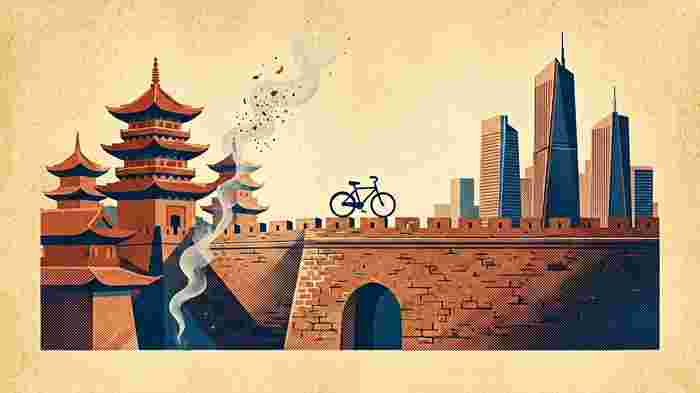
But instead of cars, the best way to experience it is by renting a bicycle.
但与其开汽车,体验它的最佳方式是租一辆自行车。
Riding a bicycle on top of the wall at sunset is an absolute must -do.
在日落时分骑自行车游览城墙绝对是必做之事。
On one side of the wall, you look down at the old city with its low, gray -tiled roofs, quiet
在城墙的一侧,你可以俯瞰老城区低矮的灰瓦屋顶、宁静的
courtyards, and narrow cobblestone alleys.
院落和狭窄的鹅卵石小巷。
On the other side of the wall, you see the modern city with its glittering skyscrapers, busy
在城墙的另一侧,你可以看到现代化的城市,有着璀璨的摩天大楼、繁忙的
highways, and shopping malls.
高速公路和购物商场。
It's like riding on a bridge that connects the past and the present.
这就像骑行在一条连接过去与现在的桥梁上。
Oh, I love that image of a bridge between eras.
噢,我喜欢那个跨越不同时代的桥梁意象。
I actually rode a bike on that wall during my last visit, and I remember the bumping sensation of
上次去的时候我确实在城墙上骑过自行车,我还记得那种颠簸的感觉,
the old stone bricks under my wheels.
那是脚下古老石砖传到车轮上的感受。
It really forces you to slow down and take it all in.
它真的会迫使你慢下来,细细品味这一切。
Now, let us dive into the culture and the daily rhythm of the local people, the Shaanxi locals.
现在,让我们深入了解当地陕西人的文化和日常节奏。
There's a very famous local art form that really captures the spirit of the people here, and that is
有一种非常著名的当地艺术形式真正捕捉并展现了这里人们的精神,那就是
Chinchang, or Shaanxi opera.
秦腔,也就是陕西戏曲。
It sounds very different from other styles of Chinese aqua, doesn't it?
它听起来和其他风格的中国戏曲很不一样,对吧?
Oh, absolutely.
噢,绝对是这样。
If you are used to the soft, flowing sounds of Beijing opera or Suzhou's Kunku, Chinchang will shock
如果你习惯了京剧或苏州昆曲柔和流畅的声音,秦腔会震撼
you in the best way possible.
到你,并且是以一种可能是最好的方式。
It is incredibly loud, powerful, and raw.
它极其响亮、强劲且粗犷。
In fact, locals jokingly say that Chinchang is the oldest rock music in China.
事实上,当地人开玩笑说秦腔是中国最古老的摇滚乐。
The actors do not just sing.
演员们可不仅仅是在唱歌。
They practically shout their lines from the depths of their chests, accompanied by loud woodblocks
他们几乎是从胸腔深处喊出台词,伴随着响亮的梆子
and high -pitched string instruments.
和高亢的弦乐器。
It is a style of singing born from the yellow earth at the lowest plateau, where people had to shout
这是一种诞生于黄土高原黄土地上的演唱风格,那里的人们不得不呐喊
across deep valleys to communicate.
穿过深谷来进行交流。
To a first -time listener, it might sound almost aggressive.
对于第一次听的人来说,它听起来可能甚至有些激进。
But once you understand the context, you realize it is pure, unvarnished passion.
但一旦你理解了其背景,你就会明白这是纯粹而未经雕琢的热情。
You can often see elderly locals gathered under the archways of the city gates or in parks, singing
你经常可以看到当地的老人在城门拱门下或公园里聚集,唱着
Chinchang for fun.
秦腔纯粹为了乐趣。
They close their eyes, throw their heads back, and sing with every ounce of energy in their bodies.
他们闭上眼睛,仰起头,用尽全身的每一丝力量去演唱。
It is deeply moving.
这极其感人。
That sounds incredibly powerful.
听起来真是无比有力。
I love how you compared it to rock music.
我非常喜欢你把它比作摇滚乐。
It makes so much sense when you think about the vast landscape and the strong character of the local people.
当你想到辽阔的地貌和当地人坚韧的性格时,这就非常合情合理了。
Speaking of cultural pockets within the city, we cannot talk about Xi 'an without mentioning the
说到城市里的文化聚集区,如果不提及
Muslim Quarter, or Huiminje.
回民街(Huiminje)就无法聊西安。
It is a place where different senses truly come alive.
这是一个各种感官真正活跃起来的地方。
Tell us about the atmosphere there, Brian.
布莱恩,快给我们讲讲那里的氛围吧。
The Muslim Quarter is a sensory overload in the most wonderful way.
回民街以最美妙的方式带来了感官上的极大震撼。
It is located just behind the ancient drum tower, and it has been the home of the city's Hui Muslim
它坐落于古老的鼓楼正后方,千百年来一直是这座城市回族穆斯林
community for over a thousand years, dating back to the Tang Dynasty Silk Road merchants.
同胞的家园,追溯至唐朝的丝绸之路商人。
When you walk into those narrow, crowded streets, your nose is immediately hit by a wall of aromas.
当你走进那些狭窄、拥挤的街道时,一股香气墙立刻扑鼻而来。
You smell roasted cumin, sizzling mutton skewers, fresh -baked bread, and sweet, sticky treats.
你能闻到烤孜然、滋滋作响的羊肉串、现烤的面包以及甜黏的小吃。
The air is filled with the sounds of merchants calling out, the loud thumping of wooden mallets
空气中弥漫着商贩的吆喝声,木槌发出响亮的敲击声,
crushing nuts for peanut candy, and the sizzle of hot oil.
为制作花生糖而碾碎坚果,以及热油发出的滋滋声。
It is a vibrant, energetic melting pot.
这是一个充满活力、生机勃勃的大熔炉。
And tucked away in these bustling streets is the Great Mosque of Xi 'an.
而隐匿在这些熙熙攘攘的街道中的,是西安清真大寺。
It is one of the oldest and most beautiful mosques in China.
它是中国最古老、最美丽的清真寺之一。
What makes it so special is its architecture.
使其如此独特的是它的建筑风格。
From the outside, it looks like a traditional Chinese garden, with pavilions, courtyards, and archways.
从外面看,它就像一个传统的中国园林,建有亭台、院落和拱门。
But when you look closely, you see beautiful Arabic calligraphy carved into the wooden walls.
但当你仔细观察时,会看到木墙上雕刻着美丽的阿拉伯书法。
It is a perfect, peaceful symbol of cultural harmony.
它是文化和谐完美而宁静的象征。
That is fascinating.
那真是令人着迷。
A mosque built in the style of a Chinese garden.
一座以中国园林风格建造的清真寺。
It really shows how deeply these different cultures integrated over the centuries.
这充分展示了几个世纪以来这些不同文化是如何深度融合的。
Now, Brian, you mentioned the food, and I have to admit, my stomach is starting to rumble.
布莱恩,你刚才提到了美食,我不得不承认,我的胃已经开始咕咕叫了。
Xi 'an is famous throughout China for its unique culinary heritage.
西安因其独特的烹饪遗产而在全国闻名。
Let us talk about the star of the show, Biong Biong Noodles.
让我们谈谈压轴的主角——𪡏𪡏面。
First of all, what is up with that name, and how do they taste?
首先,那个名字是怎么回事,它的味道又如何呢?
Ah, Biong Biong Noodles.
啊,𪡏𪡏面。
This is my absolute favorite dish in the world, Emma.
艾玛,这绝对是我在世界上最喜欢的一道菜。
The name Biong is actually an onomatopoeia.
‘𪡏’这个名字其实是一个拟声词。
It describes the loud sound the noodle maker makes when they slap the thick dough against the wooden
它描述了做面师傅把厚厚的面团摔在木
table to stretch it out.
桌上以拉伸它时发出的响亮声音。
Biong Biong.
𪡏𪡏。
The noodles themselves are thick, wide, and long, often compared to leather belts.
面条本身又厚又宽又长,常被比作皮革腰带。
They are served in a big bowl, topped with raw garlic, minced pork, boiled vegetables, and a
它们盛在大碗里,上面盖着生大蒜、切碎的猪肉末、水煮蔬菜,以及
generous heap of bright red chili flakes.
大量的鲜红辣椒面。
The magic happens at the very end, when the chef pours smoking hot oil directly over the chili and garlic.
奇迹发生在最后,当厨师把冒烟的热油直接浇在辣椒和大蒜上时。
It produces this incredible sizzle, and instantly releases a rich, spicy, aromatic cloud of steam.
它发出令人难以置信的滋滋声,并瞬间释放出浓郁、辛辣、芳香的蒸汽。
You mix it all together, and the noodles are so chewy and satisfying.
你把它们拌在一起,面条非常有嚼劲,令人满足。
Oh, and here's a fun fact for our language learners.
哦,这里为我们的语言学习者准备了一个有趣的事实。
The Chinese character for Biong is so complex with over 58 strokes that it is actually not found in
‘𪡏’这个汉字太复杂了,有58多画,以至于在
standard dictionaries.
标准字典里根本找不到。
It is a visual puzzle of a character, reflecting the rich, complex history of the noodles themselves.
这个字就像一个视觉谜题,反映了面条本身丰富复杂的历史。
Oh my goodness, 58 strokes for one word?
天哪,一个字要58画?
That is a workout for the hand just writing it.
光是写出来就是对手部的一场锻炼。
And the noodle itself sounds like a delightful workout for the jaw.
而且面条本身听起来像是对下巴的一次美妙的锻炼。
I can almost taste that hot chili oil.
我几乎能尝到那热辣的油泼辣子味了。
Now, another dish that is often called the Chinese hamburger is rugamo.
现在,另一道常被称为中国汉堡的美食是肉夹馍。
Tell us about that, because it's quite different from a Western burger, right?
快给我们讲讲吧,因为它和西方的汉堡相当不同,对吧?
Yes, it is.
是的,确实如此。
But the concept of putting delicious meat inside bread is universal.
但是把美味的肉夹在面包里的概念是通用的。
Rogamo has a history of over 2 ,000 years.
肉夹馍拥有2000多年的历史。
The bread, called by Gimo, is a flat bread cooked in a clay oven until it is slightly crispy on the
这种被称为白吉馍的饼是在泥烤炉里烤制的,直到外皮微脆,
outside, but soft and warm on the inside.
但里面却软而温热。
The filling is slow -cooked pork belly that has been simmered for hours in a giant pot with over 20
馅料是慢炖的五花肉,在大锅里加入20多种香料慢炖了数小时
different spices and herbs.
不同的香料和草药。
The meat becomes so tender that it literally melts in your mouth.
肉质变得如此软嫩,简直到了入口即化的地步。
The chef chops the meat finely, scoops it up with a splash of the rich cooking broth, and stuffs it
大厨将肉切碎,舀上一勺浓郁的炖肉高汤,然后将其塞入
into the sliced bread.
切开的馍饼中。
When you take a bite, the crispy bread crackles and the warm, savory juice from the meat bursts out.
当你咬下一口,酥脆的饼皮发出咔嚓声,肉里温暖鲜香的汁液喷涌而出。
It is simple, rustic, and pure comfort food.
它简单、质朴,是纯粹抚慰人心的高热量美食。
Stop, Brian.
别说了,布莱恩。
You are making me want to book a flight to Xi 'an right now.
你说的我现在就想预订飞往西安的机票了。
But there is one more iconic dish we must mention, and that is yung ru pomo, or mutton soup with
但还有一道标志性的美食我们必须提及,那就是羊肉泡馍,即羊肉汤配
torn bread.
掰碎的馍。
I hear there is a whole ritual involved in eating this.
听说吃这道菜有一整套仪式。
Can you walk us through it?
你能为我们讲解一下吗?
Oh, absolutely.
哦,当然可以。
Yung ru pomo is not just a meal.
羊肉泡馍不仅仅是一餐饭。
It is a social event and a test of patience.
它是一次社交活动,也是对耐心的考验。
When you order it, the waiter first brings you a large empty bowl and two pieces of unleavened flat bread.
当你点这道菜时,服务员首先会给你端来一个大空碗和两块死面(未发酵的)饼。
Your job, as the customer, is to tear the bread into tiny, tiny pieces.
作为顾客,你的任务就是把饼掰成非常非常小的碎块。
And when I say tiny, I mean the size of a soybean.
我说的小,指的是只有黄豆那么大。
If you tear them too big, the chef might actually send it back to you.
如果你掰得太粗,大厨甚至真的可能会退还给你重掰。
It takes about 15 to 20 minutes of focused work, and it is a great time to sit, chat with your
这需要大约 15 到 20 分钟专注的操作,也是坐下来与你的
friends, and drink some tea.
朋友聊天、喝茶的好时光。
Once you're done, you hand your bowl of breadcrumbs back to the kitchen.
掰好之后,你把这碗馍碎递回给厨房。
The chef then cooks those bread pieces in a rich, flavorful mutton broth with glass noodles and
大厨随后会将这些饼块放入浓郁美味的羊肉汤中,加入粉丝和
slices of tender mutton.
软嫩的羊肉片一同烹煮。
The bread absorbs all the rich, savory flavors of the broth, but still keeps a nice, chewy texture.
馍块吸收了汤头浓郁鲜香的味道,但依然保持着极佳的劲道口感。
It is served with sweet pickled garlic and chili paste on the side.
吃的时候还会附赠甜糖蒜和辣椒酱。
It is the ultimate warming meal on a cold winter day.
这是在寒冷冬日里终极的暖身美食。
That is incredible.
那真是不可思议。
I love the idea of having to work for your food, and how it turns a quick meal into a slow, mindful experience.
我喜欢这种必须付出劳动才能吃到美食的概念,以及它如何把一顿快餐变成一种慢节奏、用心感受的体验。
It really shows a different pace of life, even in a busy city.
即便是在忙碌的城市里,这也展现了完全不同的生活节奏。
Now, let us pivot to the modern side of Xi 'an.
现在,让我们转向西安现代化的一面。
Over the past decade, the city has undergone a massive transformation.
在过去十年中,这座城市经历了巨大的蜕变。
It has successfully blended its ancient heritage with cutting -edge modern life.
它成功地将古老的历史遗产与前沿的现代生活融合在一起。
A perfect example of this is the Great Tang All -Day Mall, or Datang Buyecheng.
大唐不夜城就是这方面的一个完美典范。
What is that place like, Brian?
那个地方是什么样子的,布莱恩?
The Great Tang All -Day Mall is like walking into a dream of the Tang dynasty, but with modern neon
大唐不夜城就像走进了唐朝的梦境,但配上了现代的霓虹
lights and technology.
灯光和科技。
It is a massive pedestrian street, about two kilometers long, lined with beautiful buildings built
这是一条宏大的步行街,长约两公里,两旁林立着漂亮的建筑,
in the traditional Tang architectural style.
采用传统的唐代建筑风格。
At night, the entire area lights up with thousands of colorful lanterns, light projections, and
夜晚,整个区域被数以千计的彩色灯笼、灯光投影和
interactive art installations.
互动艺术装置点亮。
There are free street performances every few hundred meters.
每隔几百米就有免费的街头表演。
You can see traditional musicians playing the guzang, dancers performing ancient court dances, and
你可以看到传统音乐家演奏古筝,舞者表演古老的宫廷舞蹈,以及
even actors dressed as historical Tang poets reciting poetry with the crowd.
甚至还有扮演唐代历史诗人的演员与人群一同吟诵诗歌。
One of the most famous performances is the Tumbler Dancer.
其中最著名的表演之一就是“不倒翁小姐姐”。
It is a young woman dressed in exquisite Tang costumes, balanced on a heavy -weighted sphere.
那是一位身着精美唐装的年轻女子,在重力底座球体上保持平衡。
She sways and floats back and forth in the air, reaching out to touch the hands of the audience.
她轻盈地在空中前后摇曳漂浮,伸出手去触碰观众的手。
It looks like she is defying gravity.
她看起来仿佛在对抗重力。
It is incredibly popular on social media, and has brought a whole new wave of young tourists to the city.
这在社交媒体上极其火爆,为这座城市带来了全新的一波年轻游客。
Yes, I have seen videos of the Tumbler Dancer online.
是的,我在网上看过不倒翁小姐姐的视频。
She looks so graceful, like a fairy floating through the air.
她看起来如此优雅,就像仙女在空中飘浮。
And speaking of young people, I've heard that it is incredibly common to see people wearing
说到年轻人,我听说随处可见穿着……的人是极其普遍的
traditional Hanfu, or Han Dynasty clothing, just walking down the street in Xi 'an.
在西安街头穿着传统汉服,也就是汉朝的服饰散步。
Is that true?
那是真的吗?
Oh, it is absolutely true, Emma.
噢,这绝对是真的,艾玛。
In many cities around the world, wearing historical clothing might look like a costume party, but in
在世界上许多城市,身穿历史服装可能看起来像是在参加化装舞会,但在
Xi 'an, it feels perfectly natural.
西安,这感觉完全自然。
You see young men and women walking down the modern subway stations, ordering coffee at Starbucks,
你会看到年轻男女穿梭在现代的地铁站里,在星巴克点咖啡,
or taking photos on the city wall, all dressed in beautiful, flowing silk robes with elaborate
或者在城墙上合影留念,他们都穿着飘逸美丽的丝绸长袍,梳着精美的
hairstyles and makeup.
发型并画着精致的妆容。
There are hundreds of Hanfu rental shops around the city, where you can get dressed up and have your
全城有数百家汉服租赁店,在那里你可以妆扮整齐,做好
makeup done for the day.
一整天的妆容。
It's not just about taking pretty pictures, though.
不过,这不仅仅是为了拍漂亮的照片。
It's a genuine expression of cultural pride.
这是对文化自豪感的真实表达。
The younger generation in China is rediscovering their history and finding creative ways to wear it
中国的年轻一代正在重新发现他们的历史,并寻找有创意的方式
on their sleeves, literally.
将其公开表达,字面意义上穿在袖子上。
That is so beautiful.
那真是太美好了。
It shows that culture is not just something frozen in time, kept in glass cases in a museum.
这表明文化不仅是冻结在时光里、保存在博物馆玻璃柜里的东西。
It's living, breathing, and constantly evolving.
它是活生生的、有呼吸的,并且在不断演变。
Brian, our conversation today has been absolutely magical.
布莱恩,我们今天的对话真是奇妙极了。
You have brought the sights, sounds, and flavors of Xi 'an so vividly to life for us.
你将西安的色、声、味如此生动地展现给了我们。
Thank you so much for sharing your passion and your stories with us today.
非常感谢你今天与我们分享你的热情和故事。
It was my absolute pleasure, Emma.
这是我极大的荣幸,艾玛。
Thank you for having me.
感谢邀请我。
And I hope all of our listeners get the chance to stand on that ancient city wall and taste those
我也希望我们所有的听众有一天都能有机会站在那座古老的城墙上,品尝那些
amazing noodles one day.
令人惊叹的面条。
Until then, keep exploring. Absolutely.
在那之前,保持探索。那是绝对的。
Well, dear listeners, that brings us to the end of today's journey into the soul of Xi 'an.
好了,亲爱的听众们,我们今天深入西安灵魂之旅就到此结束了。
Before we go, I have an interesting question for you based on our conversation today.
在我们结束之前,基于我们今天的对话,我有一个有趣的问题想问大家。
If you could travel back in time to the golden age of Tang Dynasty Chang 'an, what is the very first
如果你能穿越回唐代长安的黄金时代,你最想看的
thing you would want to see or do?
第一件事或最想做的一件事是什么?
Would you explore the bustling West Market?
你会去探索繁华的西市吗?
Watch a powerful Chinchang opera?
还是观看一场震撼的秦腔演出?
Or try to write that 58 -stroke character for Bianbiang Nodals?
或者是尝试写出𠵷𠵷面那个58画的复杂汉字?
Please write down your answer in the comments section or take a look at what other listeners have written.
请在评论区写下你的答案,或者看看其他听众写了什么。
We always love reading your creative thoughts.
我们总是非常喜欢阅读大家有创意的想法。
If you enjoyed this episode, please subscribe to TalkCast Discovery and share it with your friends
如果你喜欢本期节目,请订阅 TalkCast Discovery 并分享给你的朋友
who are learning English or love travel.
那些正在学习英语或喜欢旅游的朋友。
We are so grateful for your warm feedback and support.
我们非常感激大家热情的反馈与支持。
Remember, you can find the full English transcript and audio for this episode on our website at www
请记住,您可以在我们的网站 www 上找到本期节目的完整英文逐字稿和音频
.talkcast .top.
.talkcast.top.
Please check it out to help with your English listening and reading practice.
请前往查看,以帮助进行英语听说与阅读练习。
Also, let us know in the comments which city or cultural theme you would like us to explore in our
此外,请在评论区告诉我们你希望我们在下一期探讨哪个城市或文化主题
next episode.
下一集。
Your suggestion might just become our next big adventure.
你的建议可能就会成为我们下一次的大冒险。
Thank you for listening, and until next time, keep your curiosity alive and keep stepping off the map. Goodbye!
感谢您的收听,下期见,保持你的好奇心,继续勇于探索未知领域。再见!
Thank you.
感谢你。