Interactive transcript · 174 lines
Hello, and welcome to TalkCast, your favorite weekly show where we dive deep into science,
您好,欢迎收听 TalkCast,这是您最喜欢的每周节目,在节目中我们将深入探索科学,
technology, and the wonders of our world.
技术以及我们这个世界的奇观。
I am your host, Sarah.
我是您的主持人,萨拉。
If you are an English learner, you have come to the perfect place.
如果您是一名英语学习者,那么您来对地方了,这里是绝佳的选择。
We talk about big, exciting ideas using clear, natural, and easy -to -understand English.
我们用清晰、自然且易懂的英语,探讨许多宏大而令人兴奋的观点。
Today, we are taking a trip far, far away, into deep space.
今天,我们将踏上一段漫长的旅程,去往遥深的外太空。
Our guide for this journey is Dr.
我们本次旅程的向导是
David, a senior astrophysicist and expert in radio astronomy.
戴维博士,他是一位资深天体物理学家,也是射电天文学方面的专家。
Welcome to the show, David.
欢迎来到节目,戴维。
Thank you, Sarah.
谢谢你,萨拉。
It is wonderful to be here with you and all the TalkCast listeners today.
今天能与你以及 TalkCast 的所有听众在一起,真是太棒了。
I am excited to talk about the secrets of the universe in a way that helps everyone practice their English.
能够以帮助大家练习英语的方式探讨宇宙的奥秘,我感到非常兴奋。
We are absolutely thrilled to have you.
能邀请到您,我们感到非常高兴。
Now, let us get right into the big news.
现在,让我们直接切入正题,看看这条重磅新闻。
Recently, the National Astronomical Observatories of China announced some incredible new progress.
最近,中国科学院国家天文台宣布了一些令人难以置信的新进展。
Scientists using the famous FAST telescope, also known as the Chinese Sky Eye, have made amazing discoveries.
科学家们利用著名的 FAST 望远镜(也被称为中国天眼),取得了惊人的发现。
They have found a large number of new pulsars through the Galactic Plane Pulsar Survey.
他们通过银河系平面脉冲星巡天观测,发现了大量新的脉冲星。
For our listeners who might not know, FAST is the largest single -dish radio telescope in the world.
对于可能还不了解的听众来说,FAST 是世界上最大的单口径射电望远镜。
But David, before we talk about this giant telescope, let us start with the basics.
但是戴维,在我们讨论这个巨大的望远镜之前,让我们先从最基础的概念讲起。
What exactly is a pulsar?
脉冲星究竟是什么?
Can you explain it in simple terms?
你能用简短易懂的语言解释一下吗?
I would love to.
我很乐意。
Think of a pulsar as a cosmic lighthouse.
可以将脉冲星想象成一座宇宙灯塔。
In the vast, dark ocean of space, a lighthouse spins and shines a bright beam of light.
在浩瀚黑暗的太空海洋中,一座灯塔旋转着,发出明亮的光束。
As it rotates, you see a flash of light every time the beam points at you.
当它旋转时,每当光束指向你,你就会看到一闪而过的光芒。
A pulsar does the exact same thing, but instead of visible light, it shoots out powerful beams of
脉冲星也是如此,但它喷射出的不是可见光,而是强有力的
radio waves.
无线电波。
When these beams sweep across the Earth, our radio telescopes detect a highly regular star B, like a pulse.
当这些光束扫过地球时,我们的射电望远镜就会探测到类似于脉冲的高度的规律信号。
That is why we call them pulsars, short for pulsating stars.
这就是为什么我们称它们为脉冲星,即脉动恒星的简称。
A cosmic lighthouse.
一座宇宙灯塔。
That is a beautiful and very clear image.
这是一个非常美丽且生动的形象比喻。
So these stars are spinning and sending out pulses.
因此,这些恒星正在旋转并不断发出脉冲。
But what kind of stars are they?
但它们到底属于什么类型的恒星呢?
Are they like our Sun?
它们像我们的太阳一样吗?
Actually, they are very different from our Sun.
实际上,它们与我们的太阳大不相同。
A pulsar is a type of neutron star.
脉冲星其实是一种中子星。
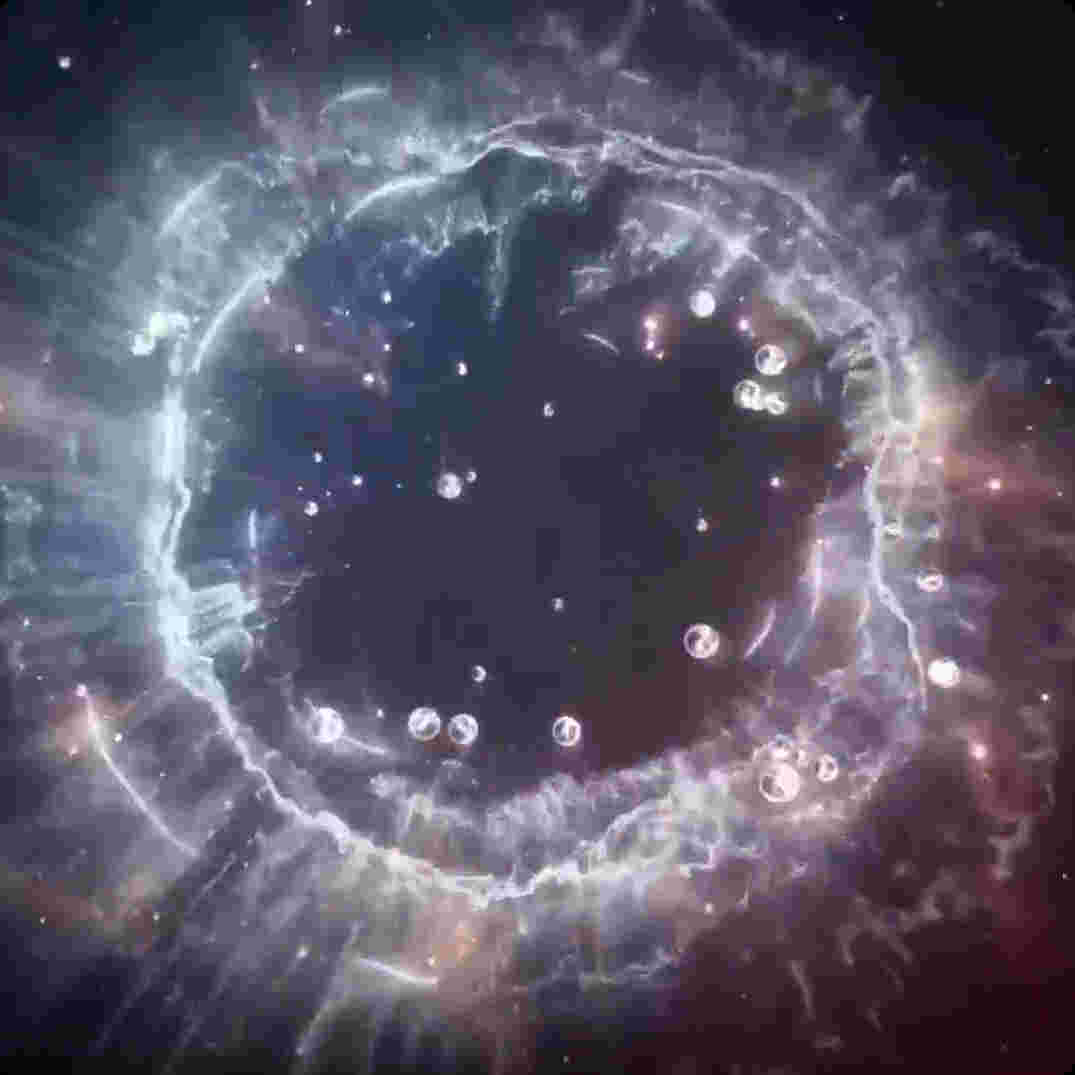
When a massive star, much bigger than our Sun, runs out of fuel, it dies in a giant explosion called
当一颗比我们的太阳大得多的大质量恒星耗尽燃料时,它会在一场巨大的爆炸中毁灭,这场爆炸被称为
a supernova.
一场超新星爆炸。
After the explosion, the core of the star collapses.
爆炸之后,恒星的核心会发生塌缩。
It gets squeezed down into an extremely small and incredibly dense ball.
它会被挤压成一个极小且密度极高的球体。
Imagine taking a star that is bigger than our Sun and squeezing it down to the size of a small city,
想象一下,将一颗比我们太阳还要大的恒星压缩到一个小城市的大小,
say about 20 kilometers across.
比如直径大约只有 20 公里。
That is a neutron star.
那就是中子星。
Wait, did you say the size of a city?
等等,你是说只有一座城市的大小吗?
That sounds unbelievably small for a star.
对于一颗恒星来说,这听起来难以置信地小。
How heavy would a small piece of such a star be?
这样一颗恒星的一小块会有多重呢?
It is mind -blowing, Sarah.
这简直令人震撼,萨拉。
Because it is so compressed, the material is extremely heavy.
因为它是如此高度压缩,所以物质极其沉重。
If you could somehow scoop up just one teaspoon of a neutron star, that single teaspoon would weigh
如果你能以某种方式舀起一茶匙的中子星物质,仅这一茶匙的重量就高达
about 1 billion tons.
大约 10 亿吨。
That's roughly equal to the weight of Mount Everest.
这大约相当于珠穆朗玛峰的重量。
A single teaspoon weighs as much as Mount Everest.
一茶匙的重量就相当于整座珠穆朗玛峰。
That is hard to even imagine.
这甚至让人难以想象。
No wonder scientists are so fascinated by them.
难怪科学家们对它们如此着迷。
But how do these super -dense, super -fast spinning stars end up spinning so fast?
但是这些超高密度、超高速自转的恒星是如何最终转得这么快的呢?
It's because of a physical rule called the conservation of angular momentum.
这是因为一个被称为角动量守恒的物理规律。
You can observe this easily in daily life.
你在日常生活中就可以轻松观察到这一点。
Imagine an ice skater spinning on ice.
想象一下一位冰上滑冰运动员在冰面上旋转。
When they pull their arms in close to their body, they suddenly spin much faster.
当他们把双臂收紧贴近身体时,旋转速度就会突然变快很多。
The same thing happens to the collapsing star.
同样的事情也发生在塌缩的恒星上。
As its giant body shrinks down into a tiny sphere, its spinning speed increases dramatically.
随着它巨大的身躯缩小成一个微小的球体,其自转速度会剧烈地增加。
Some pulsars spin hundreds of times every single second.
有些脉冲星每秒钟能旋转几百次。
Hundreds of times in one second.
在一秒钟之内旋转几百次。
That is incredibly fast.
那真是难以置信地快。
So we have these super -dense, super -fast spinning cosmic lighthouses out there.
所以我们在太空中就有了这些超高密度、超高速自转的宇宙灯塔。
How do we find them from Earth?
我们如何从地球上找到它们呢?
I understand this is where the Chinese sky eye, or FAST, comes into play. Exactly.
我明白这就是中国天眼,即FAST,发挥作用的地方。一点没错。
Because these pulsars are thousands of light years away, their radio signals are extremely weak by
因为这些脉冲星距离我们数千光年,它们的无线电信号在到达时已经极其微弱
the time they reach Earth.
当它们到达地球的时候。
To catch these faint whispers from the universe, we need an incredibly large ear.
为了捕捉来自宇宙的这些微弱细语,我们需要一只无比巨大的耳朵。
And that is what FAST is.
而FAST就是这样的设备。
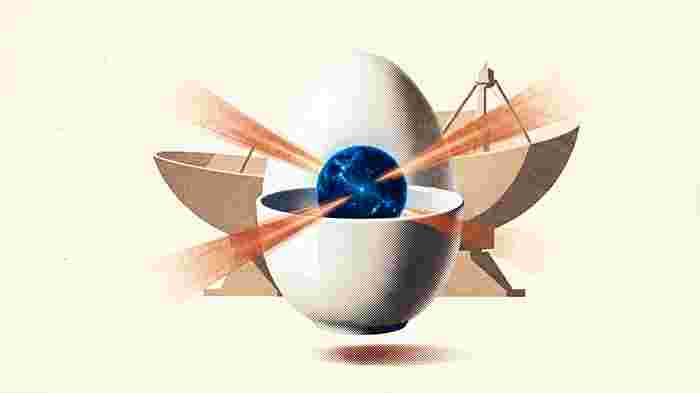
It's a radio telescope with a dish that is 500 meters wide.
它是一台射电望远镜,口径盘面宽达500米。
It's located in a natural bowl -shaped valley in Guizhou Province, southwest China.
它位于中国西南部的贵州省一个天然的碗状洼地中。
The shape is perfect because it naturally supports the giant structure.
这个形状非常完美,因为它天然地支撑着这个庞大的结构。
500 meters wide.
500米宽。
To help our listeners picture that size, how big is that compared to something we see every day?
为了帮助我们的听众想象那个尺寸,如果与我们每天看到的东西相比,它有多大呢?
If you look at its surface area, it's about the size of 30 football fields.
如果看它的表面积,大约有30个足球场那么大。
It's so huge and so sensitive that if you had a mobile phone on the moon, FAST could easily detect
它是如此庞大且如此灵敏,以至于如果你在月球上用部手机,FAST都能轻松检测到
its signal.
它的信号。
This extreme sensitivity is why FAST is so successful at finding weak, distant pulsars that other
正是这种极高的灵敏度,使得FAST在发现其他望远镜遗漏的微弱、遥远脉冲星方面如此成功
telescopes have missed.
望远镜所错过的。
30 football fields.
30个足球场。
That is massive.
那真是太巨大了。
And detecting a phone on the moon is just incredible.
而且检测到月球上的手机信号真是不可思议。
Now, let us talk about the latest breakthrough.
现在,让我们谈谈最新的突破。
The project led by researcher Han Jin Lin has discovered over 1 ,000 new pulsars.
由研究员韩金林领导的项目已经发现了1000多颗新脉冲星。
Why is finding so many pulsars such a big deal for science?
为什么找到这么多脉冲星对科学来说是一件这么重大的事情?
That is a great question, Sarah.
这是个极好的问题,莎拉。
First, finding over 1 ,000 pulsars is a huge number.
首先,找到1000多颗脉冲星是一个庞大的数字。
To put it in perspective, since the first pulsar was discovered in 1967, humans have found only
做个对比来看,自1967年发现第一颗脉冲星以来,人类总共也只发现了
about several thousand pulsars in total.
大约几千颗脉冲星。
FAST has found a large percentage of them in just a few years.
FAST在短短几年内就找到了其中很大比例的脉冲星。
By finding so many, we can create a much better map of our galaxy, the Milky Way.
通过找到这么多脉冲星,我们可以绘制出一份好得多的我们星系(银河系)的地图。
But more importantly, these discoveries include rare types of pulsars, such as millisecond pulsars
但更重要的是,这些发现包含了稀有类型的脉冲星,比如毫秒脉冲星
and binary pulsars.
和双星脉冲星。
Ah, millisecond pulsars and binary pulsars.
啊,毫秒脉冲星和双星脉冲星。
Those sound like complex terms.
听起来像是一些复杂的术语。
Could you explain what they are?
你能解释一下它们是什么吗?
Of course.
当然了。
A millisecond pulsar is a pulsar that spins once every few milliseconds.
毫秒脉冲星是指每隔几毫秒就自转一周的脉冲星。
They are the fastest spinning stars we know.
它们是我们所知的自转最快的恒星。
What makes them special is their extreme stability.
它们的特别之处在于其极高的稳定性。
They spin with such precise regularity that they are like the most accurate clocks in the universe.
它们以极其精准的规律性自转,就像是宇宙中最精确的钟表。
They are even more stable than the atomic clocks we make on Earth.
它们甚至比我们在地球上制造的原子钟还要稳定。
A binary pulsar, on the other hand, is a pulsar that is orbiting around another star.
另一方面,双星脉冲星是指围绕另一颗恒星公转的脉冲星。
They are like two dancers holding hands and spinning around each other in space.
它们就像两位手拉手在太空中共舞的舞者。
Two dancers in space.
太空中的两位舞者。
That is a lovely image.
那真是个美好的画面。
But why are these cosmic clocks and celestial dancers so useful to scientists?
但是为什么这些宇宙钟表和天体舞者对科学家如此有用呢?
They are incredibly useful because they act as natural laboratories.
它们极其有用,因为它们充当了天然的实验室。
In these laboratories, the gravity is extremely strong.
在这些实验室里,引力极强。
We can use these precise cosmic clocks to test Albert Einstein's famous theory of general relativity.
我们可以利用这些精确的宇宙钟表来检验阿尔伯特·爱因斯坦著名的广义相对论。
If Einstein's theory is correct, the intense gravity of these stars should affect the timing of
如果爱因斯坦的理论是正确的,这些恒星强烈的引力应该会影响
their pulses in very specific ways.
它们脉冲的时序,且影响方式非常特定。
By measuring these pulses with fast, we can see if Einstein was right.
通过用FAST测量这些脉冲,我们可以看看爱因斯坦是否是对的。
So far, his theory has passed the test beautifully.
到目前为止,他的理论已经完美地通过了检验。
That is amazing.
这太神奇了。
Einstein wrote his theory over a century ago, and we are still using these newly discovered stars to
爱因斯坦在一个多世纪前写下了他的理论,而我们现在仍在使用这些新发现的恒星来
prove he was right.
证明他是对的。
Are there any other ways these pulsars can help us?
这些脉冲星还能在其他方面帮助我们吗?
Perhaps even in our daily lives?
也许甚至在我们的日常生活中?
Yes, actually.
是的,实际上确实可以。
One of the most exciting potential applications is space navigation.
最令人兴奋的潜在应用之一是太空导航。
Right now on Earth, we use GPS satellites to find our way around.
现在在地球上,我们使用GPS卫星来辨别方向。
But if we send spacecraft deep into space, beyond our solar system, Earth's GPS will not work.
但如果我们把航天器送入深空,超出太阳系,地球的GPS就管用了。
Since pulsars are scattered across the galaxy and pulse with perfect timing, they can serve as a GPS
由于脉冲星分散在整个星系中,并且以完美的时序发出脉冲,它们可以充当GPS
system for deep space.
深空导航系统。
A spacecraft could look at different pulsars, measure their pulses, and calculate exactly where it
航天器可以观测不同的脉冲星,测量它们的脉冲,并精准计算出它
is in the universe.
在宇宙中的确切位置。
We call this pulsar navigation.
我们称之为脉冲星导航。
Pulsar navigation.
脉冲星导航。
So these stars could literally become the lighthouses that guide future human astronauts exploring
因此这些恒星真的可以成为指引未来人类宇航员探索的灯塔
deep space.
深空。
That sounds like science fiction coming to life.
这听起来就像科幻变成了现实。
It really does.
确实如此。
And another exciting area is the detection of gravitational waves.
另一个令人兴奋的领域是引力波的检测。
These are ripples in the fabric of space and time caused by violent cosmic events, like colliding
这些是剧烈的宇宙事件(如相撞)在时空结构中产生的涟漪
black holes.
黑洞。
When a gravitational wave passes through our galaxy, it slightly stretches and squeezes space.
当引力波穿过我们的星系时,它会稍微拉伸和挤压空间。
This changes the distance between Earth and the pulsars very slightly, causing the pulses to arrive
这会微乎其微地改变地球与脉冲星之间的距离,导致脉冲到达
a tiny bit early or late.
时间稍早或稍晚微小的一点。
By watching a network of millisecond pulsars, FAST can help us detect these cosmic ripples and open
通过监测毫秒脉冲星网络,FAST可以帮助我们检测这些宇宙涟漪,并开启
a new window to studying the universe.
研究宇宙的新窗口。
It is truly fascinating how studying these distant, dead stars can teach us so much about the
研究这些遥远且已死亡的恒星能教会我们这么多知识,这真的非常令人着迷
fundamental nature of space and time.
时空的基本本质。
It shows us how interconnected everything in the universe is.
它向我们展示了宇宙中的一切是如何相互联系的。
Absolutely, Sarah.
当然了,莎拉。
And what makes it even more exciting is that this is just the beginning.
而更令人兴奋的是,这仅仅是个开始。
FAST is still scanning the sky, and scientists are continuously improving its technology.
FAST仍在扫描天空,科学家们也在不断改进其技术。
We are also using artificial intelligence to help analyze the massive amounts of data FAST collects.
我们还利用人工智能来帮助分析FAST收集的海量数据。
There are likely many more strange and wonderful objects waiting to be found.
还很有可能有更多奇特而美妙的天体等待被发现。
That is a wonderful outlook.
那真是个棒极了的展望。
The future of astronomy indeed looks very bright thanks to giant eyes like FAST and the brilliant
得益于像FAST这样的巨眼和杰出的,天文学的未来确实看起来一片光明
minds working behind them.
在它们背后工作的杰出头脑。
Well, David, this has been an absolutely mind -expanding conversation.
好吧,大卫,这绝对是一场开阔视野的对话。
You have explained some very complex concepts so beautifully and simply.
你把一些非常复杂的概念解释得如此生动简洁。
Thank you so much for joining us on TalkCast today.
非常感谢您今天做客 TalkCast。
It was my absolute pleasure, Sarah.
这是我的荣幸,莎拉。
Thank you for having me.
感谢您的邀请。
And I hope our listeners enjoyed learning about pulsars as much as I enjoyed talking about them.
我也希望我们的听众像我乐于探讨脉冲星一样,喜欢了解它们。
Keep practicing your English, everyone.
大家要坚持练习英语哦。
And that brings us to the end of today's episode of TalkCast.
今天的 TalkCast 节目到这里就接近尾声了。
Before we say good body, we have a fun question for all of you.
在道别之前,我们给大家准备了一个有趣的问题。
Based on our conversation today, if a pulsar is like a lighthouse in space, what would a single
根据我们今天的对话,如果脉冲星就像太空中一座灯塔,那么单单
teaspoon of its material weigh on earth?
一茶匙它的物质在地球上会有多重?
Please write your answers in the comments section below, or check out what other listeners are saying.
请在下方的评论区写下你的答案,或者看看其他听众都在说些什么。
If you enjoyed this episode, please consider joining the TalkCast membership, subscribing to our
如果您喜欢本集节目,请考虑加入 TalkCast 会员,订阅我们的
channel, and sharing this show with your friends and family.
频道,并把节目分享给你的亲朋好友。
Your warm feedback and support mean the world to us.
你们温暖的反馈和支持对我们来说意义重大。
Also, we want to remind our listeners that the English transcripts and audio files for this series
此外,我们想提醒听众,该系列的英文逐字稿和音频文件
are regularly published on our website at www .talkcast .com and on our WeChat official account, which
都会定期发布在我们的网站 www.talkcast.com 以及微信公众号上,公众号
is also named TalkCast.
名字也叫做 TalkCast。
Please feel free to visit them for your learning needs.
欢迎根据您的学习需求随时访问。
Thank you for listening, and we will see you next time on TalkCast. TalkCast.
感谢您的收听,我们下次 TalkCast 再见。