Interactive transcript · 169 lines
Hello, and welcome to TalkCast, the podcast where we dive deep into the most exciting developments
大家好,欢迎来到 TalkCast,这是一档我们深入探讨最激动人心进展的播客节目
in science, technology, and society.
涵盖科学、技术与社会。
I am your host, James.
我是您的主持人詹姆斯。
Before we begin today's fascinating journey, I want to say a huge heartfelt thank you to all of our
在开始今天引人入胜的旅程之前,我想向我们所有的成员致以最衷心的感谢
TalkCast members.
TalkCast 成员。
Your incredible support keeps this show running and allows us to bring high -quality educational
您难以置信的支持维持着本节目的运转,并让我们能够带来高质量的教育性
content to English learners and science enthusiasts all over the world.
内容给全世界的英语学习者和科学爱好者。
If you haven't joined our membership yet, please consider doing so.
如果您还没有加入我们的会员,请考虑加入。
TalkCast truly needs your support to keep growing and producing these episodes.
TalkCast 确实需要您的支持来不断成长并制作这些单集。
Now, on to today's topic.
现在,进入今天的主题。
Have you ever wondered how we can store electricity on a massive scale?
你是否想过我们如何在大规模上储存电力?
We are not talking about the small batteries in your smartphones, but rather giant power banks
我们说的不是智能手机里的微型电池,而是巨型充电宝
capable of powering entire cities.
能够为整座城市供电。
This week, an extraordinary milestone was reached in Jintan, Jansu province.
本周,江苏金坛达成了一个非凡的里程碑。
The world's largest salt cavern compressed air energy storage project completed its full system startup.
全球最大的盐穴压缩空气储能项目完成了全系统启动。
It is being called a giant underground superpower bank.
它被称为一个巨大的地下超级充电宝。
To help us understand the incredible science behind this, we are joined today by Dr.
为了帮助我们理解这背后不可思议的科学,今天我们邀请到了
Elizabeth, a senior energy storage expert and geophysicist.
伊丽莎白博士,一位资深储能专家兼地球物理学家。
Welcome to TalkCast, Elizabeth.
欢迎来到 TalkCast,伊丽莎白。
Thank you so much, James.
非常感谢你,詹姆斯。
It is an absolute pleasure to be here with you and your wonderful listeners today.
今天能与你和优秀的听众们在一起,感到绝对的荣幸。
I am always excited to talk about green energy, especially when we are looking at innovative ways to
我总是对探讨绿色能源感到兴奋,尤其是当我们正在寻找创新的方法去
solve the world's biggest climate challenges.
解决世界上最大的气候挑战时。
We are thrilled to have you.
我们非常高兴能邀请到您。
So, Elizabeth, let us start with the basics.
那么,伊丽莎白,让我们从基础开始吧。
The news mentions a salt cavern compressed air energy storage project.
新闻中提到了一个盐穴压缩空气储能项目。
When I hear the word salt cavern, I literally picture a giant cave made of salt deep underground.
当我听到“盐穴”这个词时,我字面上脑海里浮现的是地下深处由盐构成的巨型洞穴。
Is that actually what it is?
它实际上真的就是那样吗?
That is actually a very accurate picture, James.
詹姆斯,这实际上是一个非常准确的形象化画面。
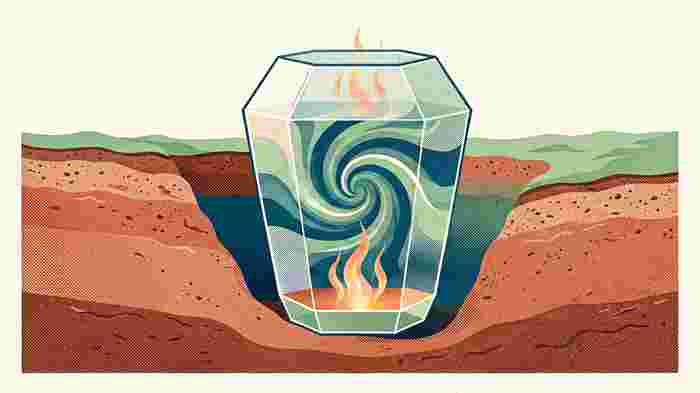
These caverns are indeed giant underground chambers made of salt rock.
这些洞穴确实是由盐岩构成的巨大地下腔室。
They are formed through a process called solution mining.
它们是通过一种被称为水溶采矿的工艺形成的。
Essentially, industrial companies pump water deep underground to dissolve the salt and extract it as
本质上,工业公司将水抽入地下深处以溶解盐分,并将其提取为
brine, which is used for table salt or chemical industries.
卤水,用于食用盐或化学工业。
What they leave behind are massive, stable, and completely empty caverns, often hundreds of meters
他们留下来的是巨大的、稳定的且完全空旷的洞穴,通常深达数百米
deep and large enough to fit an entire skyscraper inside.
深度足以在内部容纳一整座摩天大楼。
That is mind -blowing.
这真是令人震撼。
Giant empty caves where salt used to be.
曾经是盐的巨型空旷洞穴。
But why salt?
但为什么是盐?
Why not just use regular rock caves or old coal mines to store compressed air?
为什么不直接使用普通岩洞或废弃煤矿来储存压缩空气呢?
That is the golden geological question.
这是一个绝佳的地质学问题。
Salt rock has two incredible properties that make it perfect for storing high -pressure gas.
盐岩有两个不可思议的特性,使其非常适合储存高压气体。
First, it is highly impermeable.
首先,它是高度不渗透的。
Impermeable means that gas cannot pass through it.
不渗透意味着气体无法通过它。
Unlike regular rock, which has tiny microscopic pores and cracks that let air leak out, salt rock
与拥有极微小微观孔隙和裂缝会导致空气泄漏的普通岩石不同,盐岩
behaves almost like solid plastic under pressure.
在压力下的表现几乎就像固体塑料一样。
Second, salt rock has a self -healing property.
其次,盐岩具有自愈特性。
If a tiny crack develops due to pressure, the salt actually flows slowly over time to seal the crack itself.
如果因为压力产生微小裂缝,盐实际上会随着时间的推移缓慢流动以封堵裂缝本身。
This makes salt caverns the ultimate natural storage tanks. Wow.
这使得盐穴成为终极的天然储气罐。哇。
Self -healing rock.
自愈岩石。
That sounds like something straight out of the science fiction movie.
这听起来就像是直接出自科幻电影里的东西。
So, we have this giant, airtight underground balloon.
所以,我们有这样一个巨大的、密封的地下气球。
How do we turn it into a super power bank?
我们如何把它变成一个超级充电宝呢?
How does the process actually work?
这个过程到底是如何运作的呢?
It is beautifully simple in theory, though highly advanced in engineering.
从理论上讲它非常简单,但在工程上却极其先进。
The system works in two main phases.
该系统主要分为两个阶段工作。
The charging phase and the discharging phase.
充电阶段和放电阶段。
Think of it like a cycle.
把它想象成一个循环。
During the charging phase, which usually happens at night when people are asleep, there is a lot of
在通常发生于夜间人们入睡时的充电阶段,会有大量的
excess electricity from wind turbines or solar plants.
来自风力发电机或太阳能电站的过剩电能。
We use this cheap, clean electricity to power giant air compressors.
我们利用这种廉价、清洁的电力来驱动巨大的空气压缩机。
These compressors suck in normal air from the atmosphere, compress it to a very high pressure, and
这些压缩机从大气中吸入普通空气,将其压缩到非常高的压力,然后
pump it down into the salt cavern.
将其泵入盐穴中。
This stores the energy as potential energy in the form of highly compressed air.
这就以高度压缩空气的形式将能量储存为势能。
Ah, I see.
啊,我明白了。
So, when electricity is cheap and abundant, we use it to pack the underground salt cave tight with
所以,当电力便宜且充沛时,我们就用它把地下盐洞塞满
compressed air.
压缩空气。
And then what happens when the city actually needs that power during the day? Exactly.
那么当城市在白天确实需要那些电力时会发生什么呢?正是如此。
During the day, when factories are running, offices are open, and air conditioners are humming, the
在白天,当工厂在运转,办公室在开放,空调在嗡嗡作响时,
demand for electricity spikes.
电力需求激增。
This is the discharging phase.
这就是放电阶段。
We open the valves, and the high -pressure air rushes out of the cavern.
我们打开阀门,高压空气就从盐穴中冲出来。
As this air escapes, it goes through a turbine, which is like a giant windmill.
当空气逸出时,它会穿过涡轮机,这就像一个巨大的风车。
The rushing air spins the turbine, the turbine spins a generator, and presto, we generate
冲出的空气带动涡轮机旋转,涡轮机带动发电机旋转,接着我们就输出了
electricity and send it back to the power grid.
电能并将其送回电网。
That sounds incredibly elegant.
听起来非常精妙。
But as someone who loves physics, I have to ask about thermodynamics.
但作为一个热爱物理的人,我必须问问关于热力学的问题。
I remember when I pump up my bicycle tire, the hand pump gets very hot.
我记得给我自行车轮胎打气时,打气筒会变得非常热。
If we compress air on such a massive scale, doesn't it generate an enormous amount of heat?
如果我们如此大规模地压缩空气,难道不会产生巨大的热量吗?
And conversely, doesn't expanding the air make it freezing cold?
而且相反地,空气膨胀难道不会使其变得冰冷吗?
James, you get an A -plus in physics.
詹姆斯,你的物理可以得满分。
You have just pointed out the single biggest challenge in compressed air history.
你刚好指出了压缩空气历史上的最大挑战。
When you compress air, it gets extremely hot, up to several hundred degrees Celsius.
当压缩空气时,它会变得极热,高达数百摄氏度。
In older, traditional systems, this heat was simply wasted and released into the atmosphere.
在旧的传统系统中,这种热量就被直接浪费并释放到大气中了。
Then when they released the cold, expanding air to generate power, they actually had to burn natural
然后,当他们释放冰冷的、膨胀的空气来发电时,他们实际上不得不燃烧天然
gas to heat it up so the turbine wouldn't freeze and break.
气将其加热,以免涡轮机冻结损坏。
That was not very green, and it wasted a lot of energy. Exactly.
那很不环保,而且浪费了大量能源。一点也没错。
That sounds like it would defeat the purpose of being a clean energy source.
这听起来会违背作为清洁能源的目的。
So how did the engineers in Jintan solve this temperature problem?
那么金坛的工程师们是如何解决这个温度问题的呢?
They used a cutting -edge technology called Advanced Adiabatic Compressed Air Energy Storage.
他们使用了一项名为“高级绝热压缩空气储能”的前沿技术。
Adiabatic simply means that no heat is gained or lost from the system.
绝热简单来说就是系统没有热量的增加或损失。
In Jintan, when they compress the air, they capture all of that extreme heat using a thermal energy
在金坛,当他们压缩空气时,会收集所有极高的热量,利用热能
storage system.
储存系统。
They store this heat in huge tanks of water or thermal oil.
他们将这些热量保存在巨大的水罐或导热油罐中。
Then when they release the compressed air to generate electricity, they run the air back through
然后,当他们释放压缩空气来产生电能时,他们让空气重新穿过
that stored heat, warming it up before it hits the turbine.
储存的热量,在空气撞击涡轮机之前对其进行加热。
This means zero burning of fossil fuels and zero carbon emissions.
这意味着零化石燃料燃烧和零碳排放。
It is a completely closed, clean loop.
这是一个完全封闭、清洁的回路。
That is absolutely brilliant.
这绝对太精彩了。
It's like recycling the heat we generated in the first place.
这就像回收利用我们最初产生的热量一样。
This brings me to another important concept, efficiency.
这就引出了另一个重要概念,效率。
In the energy world, we talk about round -trip efficiency.
在能源界,我们探讨的是往返效率。
Can you explain what that means for our listeners and how efficient this salt cave system is?
你能为我们的听众解释一下这意味着什么,以及这个盐穴系统有多高效吗?
Of course.
当然可以。
Round -trip efficiency is basically a measure of how much energy we get back compared to how much
往返效率基本上是衡量我们能回收多少能量与
energy we put in.
投入了多少能量的比率。
If you put 10 units of electricity in and you get 6 units back, your efficiency is 60%.
如果你投入10单位的电力,回收6单位,你的效率就是60%。
For a long time, compressed air storage had a very low efficiency, around 40%.
长期以来,压缩空气储能的效率非常低,大约在40%左右。
But with this new heat recycling technology used in the Jintan project, the round -trip efficiency
但随着金坛项目采用这项全新的热量回收技术,往返效率
can reach over 60%, and some advanced systems are aiming for 70%.
可以达到60%以上,一些先进的系统目标甚至是70%。
While that is lower than chemical lithium batteries, which can be around 80 % to 90%, salt caves
虽然这低于化学锂电池(效率约为80%到90%),但盐穴
offer something batteries cannot—scale and lifespan.
能够提供电池无法具备的优势——规模和寿命。
Let's talk about that comparison.
让我们来聊聊那个对比。
When most people think of batteries, they think of lithium -ion batteries, like the ones in electric
当大多数人想到电池时,他们会想到锂离子电池,比如电动汽车里的电池
vehicles or our homes.
车辆或我们家里的电池。
Why should we build giant underground air caves instead of just building massive warehouses full of
为什么我们要建造巨大的地下空气洞穴,而不是直接建造装满锂电池的庞大仓库?
lithium batteries?
锂电池呢?
That is a very practical question.
这是一个非常实际的问题。
First is the environmental impact and cost.
首先是环境影响和成本。
Lithium batteries require mining rare metals like lithium, cobalt, and nickel, which is expensive
锂电池需要采矿获取锂、钴和镍等稀有金属,这非常昂贵
and has a heavy environmental footprint.
并且具有很大的环境足迹。
Second is lifespan.
其次是寿命。
Lithium batteries degrade over time.
锂电池会随着时间推移而退化。
After a few thousand charges, their capacity drops significantly, just like your old telephone.
充放电几千次后,它们的容量会显著下降,就像你的旧手机一样。
A salt cavern, however, does not degrade.
然而,盐穴不会退化。
You can compress and release air millions of times over decades, and the cavern remains perfectly fine.
几十年来,你可以压缩和释放空气数百万次,而洞穴依然完好无损。
It has a lifespan of 40 to 50 years, or even more.
它的寿命长达40到50年,甚至更久。
Finally, there is no risk of thermal runaway, which is a fancy term for battery fires.
最后,不存在热失控的风险,热失控是电池起火的一种高级说法。
That makes a lot of sense.
这非常有道理。
So while lithium batteries are great for short -term, rapid responses, salt caves are perfect for
因此,虽然锂电池非常适合短期、快速的响应,但盐穴非常适合
long -duration, heavy -duty grid storage.
长时长、重负荷的电网储能。
They're like the marathon runners of the energy storage world, whereas lithium batteries are the sprinters.
它们就像储能界的马拉松选手,而锂电池则是短跑选手。
I love that analogy, James.
我喜欢这个类比,詹姆斯。
Yes, they are exactly like marathon runners.
是的,它们完全就像马拉松选手。
They can provide power steadily for hours and hours, keeping the electrical grid stable when the
它们可以连续数小时稳定地提供电力,在
wind stops blowing or the sun goes down.
风停止吹拂或太阳落山时保持电网稳定。
This Jintan project in Jiangsu is a massive achievement.
江苏的这个金坛项目是一项巨大的成就。
What does this mean for the future of renewable energy globally?
这对全球可再生能源的未来意味着什么?
Can we build these salt cave power banks anywhere in the world?
我们能在世界任何地方建造这些盐穴电力储能库吗?
Well, the primary limitation is geology.
嗯,主要的限制因素是地质结构。
You need to have underground salt deposits to build these caverns.
你需要拥有地下盐矿床才能建造这些洞穴。
Fortunately, salt deposits are quite coming globally.
幸运的是,盐矿床 globally 相当普遍。
North America, Europe, and many parts of Asia have massive underground salt structures.
北美、欧洲和亚洲许多地区都有庞大的地下盐结构。
The success of the Jintan project proves that this technology is commercially viable and highly efficient.
金坛项目的成功证明了这项技术在商业上是可行的,而且效率很高。
It serves as a blueprint for countries around the world to utilize their own underground resources
它为世界各国利用自身的地下资源提供了蓝图
to support the transition to green energy.
以支持向绿色能源的转型。
It is truly inspiring to see how we can turn old industrial salt mines into cutting -edge green technology.
看到我们如何将旧工业盐矿转化为前沿的绿色技术,真是令人鼓舞。
It's like nature gave us the perfect storage boxes, and we finally figured out how to use them.
这就像大自然给了我们完美的储存盒,而我们终于弄清楚了如何使用它们。
Elizabeth, thank you so much for breaking down such a complex physical and geological concept into
伊丽莎白,非常感谢你把这样一个复杂的物理和地质概念拆解成
something so clear and fascinating.
如此清晰和引人入胜的内容。
It was my absolute pleasure, James.
这是我绝对的荣幸,詹姆斯。
Thank you for having me, and I hope your listeners enjoyed learning about the earth beneath their feet.
感谢您邀请我,希望您的听众能愉快地了解他们脚下的大地。
I am sure they did.
我确信他们会的。
What an eye -opening conversation.
这真是令人开阔视野的对话。
We learned how empty salt caves deep underground can act as giant natural balloons, storing energy
我们了解到,地下深处空旷的盐洞穴如何像巨大的天然气球一样储存能量
as compressed air and heat, and releasing it as clean electricity.
以压缩空气和热量的形式,并将其作为清洁电能释放出来。
This is the kind of innovation that will power our sustainable future.
正是这种创新将照亮我们可持续的未来。
Now, dear listeners, it is time for our question of the day.
现在,亲爱的听众们,到了我们今天的提问环节。
If you could design a new way to store green energy using other natural features of our planet, what
如果你能利用我们星球的其他自然特征设计出一种储存绿色能源的新方法,你会
would you use?
你会使用什么呢?
For example, would you use gravity, water, or perhaps the heat from volcanoes?
例如,你会利用重力、水,还是来自火山的热量?
Please write down your creative answers in the comments section below, or check out what other
请在下方的评论区写下你富有创意的答案,或者看看其他
listeners have written.
听众都写了些什么。
Don't forget to subscribe to TalkCast and share this episode with your friends who are learning
不要忘记订阅 TalkCast,并将本期节目分享给正在学习
English or love science.
英语或热爱科学的朋友们。
We deeply appreciate your feedback and support.
我们非常感谢您的反馈和支持。
Also, a quick reminder, the full English transcript and audio of this episode will be published
另外顺便提醒一下,本期节目的完整英文逐字稿和音频将在
regularly on our website at www .talkcast .top and on our WeChat official account, which is also named TalkCast.
定期发布在我们的网站 www.talkcast.top 和微信公众号(同名 TalkCast)上。
Be sure to check them out if you need reading practice.
如果您需要阅读练习,一定要去看看。
Thank you for listening, keep learning, and we will see you next time on TalkCast.
感谢您的收听,保持学习,我们下次 TalkCast 再见。