Interactive transcript · 92 lines
Welcome to TalkCastTalk, the podcast where we journey beyond the limits of time to uncover the
欢迎收听 TalkCastTalk 播客,我们将在这档播客中跨越时间的局限,去探索
voices that still speak to us today.
至今仍能与我们对话的声音。
I am Elizabeth.
我是埃莉萨白。
Have you ever faced an obstacle in your life that felt so massive, so absolutely insurmountable,
你是否在生活中遇到过如此巨大、绝对无法逾越的障碍,
that the only logical choice seemed to be surrender?
以至于唯一理性的选择似乎只有放弃?
Well, today we are diving into an ancient Chinese fable that challenges our very definition of what
今天,我们将深入探讨一个中国古代寓言,它挑战了我们对
is possible and what is logical.
何为可能、何为合乎逻辑的定义。
Joining me today is David, an associate professor of East Asian literature and an accomplished translator.
今天来到我们节目的是戴维,他是一位东亚文学副教授,也是一位造诣深厚的翻译家。
David has spent years exploring classical Chinese literature, and this particular story holds a very
戴维多年来致力于研究中国古典文学,而这个故事在他心中有着非常
special place in his heart.
特殊的位置在心中。
Welcome, David.
欢迎你,戴维。
Thank you, Elizabeth.
谢谢你,埃莉萨白。
It is absolutely wonderful to be here.
能来到这里真是太棒了。
You know, this story, Yugong Yi Shan, or The Foolish Old Man Removes the Mountains, is something I
你知道,愚公移山这个故事,也就是《愚公移山》,是我
first encountered during my university exchange year in Beijing.
在北京大学做交换生期间第一次接触到的。
I was struggling with classical Chinese, feeling completely overwhelmed, when my professor shared
当时我正在为文言文发愁,感到不堪重负,就在那时我的教授和我分享了
this fable with me.
这个寓言。
It completely shifted my perspective on effort, time, and perseverance.
它彻底改变了我对努力、时间与坚持的看法。
Written during the Warring States period and preserved in the Taoist text Lietzi, this fable is a
这篇寓言创作于战国时期,保存于道家著作《列子》中,
cornerstone of Chinese culture.
是中国文化的基石。
It tells the story of a 90 -year -old man who decides to level two colossal mountains blocking his doorway.
它讲述了一位九十岁的高龄老人决定铲平阻挡家门的两座巨山的故事。
But beneath the simple narrative lies a profound philosophical debate between short -term pragmatism
但在简单的叙事背后,隐藏着短期实用主义与
and infinite vision.
无限远见之间深刻的哲学思辨。
As you listen, I recommend focusing on the cadence of the old man's argument.
在聆听时,我建议大家关注老人家辩论中的抑扬顿挫。
It is a masterclass in rhetorical power.
这是展现修辞力量的大师课。
That is a beautiful way to frame it.
这种表达视角非常美妙。
Without further ado, David, please share this timeless story with our listeners.
话不多说,戴维,请为我们的听众讲述这个历久弥新的故事吧。
The two mountains, Taihong and Wangwu, which cover an area of 700 square li and rise to an altitude
太行、王屋二山,方七百里,高万仞,
of tens of thousands of feet, originally stood to the south of Jitsu and to the north of Heiyang.
本在冀州之南,河阳之北。
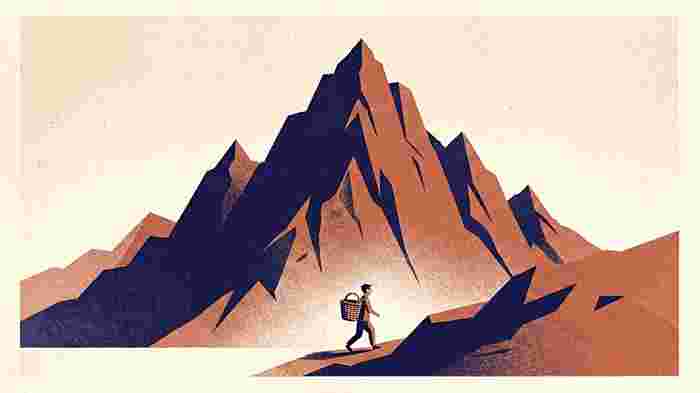
The foolish old man of the North Mountain, who was nearly 90 years of age, lived facing these mountains.
北山愚公者,年且九十,面山而居。
Distressed by the fact that the mountains blocked the way to the north and made every journey long
惩山北之塞,出入之迂也,
and circuitous, he called his family together and said, Shall we put forth our joint efforts to
聚室而谋曰:“吾与汝毕力平险,
level these obstacles so that we may have a direct path to the south of Jitsu and down to the
指通豫南,
southern bank of the Han River?
达于汉阴,可乎?”
To this they all agreed.
杂然相许。
His wife, however, expressed her doubts, saying, With your remaining strength you cannot even wear
其妻献疑曰:“以君之力,曾不能损
down a small hillock like Kui Fu.
魁父之丘,
What can you do against such giants as Taihong and Wangwu?
如太行、王屋何?
And moreover, where will you dumple the earthen stones?
且焉置土石?”
The others replied, We can throw them into the tail of the Bohai Sea and to the north of Yindu.
杂曰:“投诸渤海之尾,隐土之北。”
Thereupon, leading three of his sons and grandsons who could carry loads on their shoulders, he
遂率子孙荷担者三夫,
broke up rocks and dug up soil, transporting them in baskets to the tail of the Bohai Sea.
叩石垦壤,箕畚运于渤海之尾。
A widow named Ching Seng had a little boy who had just shed his milk teeth.
邻人京城氏之孀妻有遗男,始龀,
He skipped along happily to help them.
跳往助之。
It took them a whole year, from the heat of summer to the cold of winter, to make a single round trip.
寒暑易节,始一反焉。
The wise old man of the riverbend laughed at him and tried to stop him, saying, How foolish you are!
河曲智叟笑而止之曰:“甚矣,汝之不惠!
With the last of your strength in your declining years, you cannot even pull up a single blade of
以残年余力,曾不能毁山之一毛,
grass on those mountains, let alone deal with all that rock and soil.
其如土石何?”
The foolish old man of the north mountains sighed deeply and said, Your mind is so obstructed that
北山愚公长息曰:“汝心之固,
it is utterly impenetrable.
固不可彻,
You are not even as sensible as the widow and her young boy.
曾不若孀妻弱子。
Though I should die, there will still be my sons.
虽我之死,有子存焉。
My sons will have grandsons, and those grandsons will have sons of their own.
子又生孙,孙又生子;
Sons and grandsons will multiply endlessly, whereas these mountains will grow no higher.
子又有子,子又有孙;子子孙孙无穷匮也,而山不加增,
Why should we despair of leveling them?
何苦而不平?
The wise old man of the riverbend was speechless.
河曲智叟亡以应。
The serpent -holding God, hearing of this, was afraid that they would never stop, and reported it to
操蛇之神闻之,惧其不已也,告之于
the heavenly emperor.
帝。
The emperor was so moved by the old man's sincerity that he ordered the two sons of Kuei, a deity of
帝感其诚,命夸娥氏二子
immense strength, to carry the two mountains away on their backs.
负二山,
They placed one in the east of Shou and the other in the south of Yang.
一厝朔东,一厝雍南。
Since that time, there has been no high land to obstruct the path from the south of Jitsu to the
自此,冀之南,
southern bank of the Han River.
汉之阴,无陇断焉。
Thank you so much, David.
非常感谢你,戴维。
That was a truly spellbinding reading.
这真是令人入迷的朗读。
The rhythm of your translation beautifully captures the ancient, deliberate weight of the narrative.
你翻译的节奏优美地展现了故事古朴而沉稳的分量。
It really brings out the contrast between the two main characters.
这真的凸显了两个主要人物之间的对比。
Thank you, Elizabeth.
谢谢你,伊丽莎白。
Yes, the dialogue is really the heart of the story.
是的,对话确实是故事的核心。
The wise old man represents what we might call standard rationality.
智叟代表了我们所说的标准理性。
He sees the physical impossibility of a 90 -year -old moving mountains.
他看到了一个90岁老人移山在物理上的不可能。
But the foolish old man operates on a completely different scale of time.
但愚公则在一个完全不同的时间尺度上运作。
He redefines wisdom by looking beyond his own individual lifespan. Exactly.
他超越了自身的个人寿命,重新定义了智慧。确实如此。
It teaches us that sometimes what the world calls foolish is actually a deeper form of wisdom.
它告诉我们,有时世人所谓的愚蠢,实际上是一种更深层次的智慧。
Now, for our listeners, we have a quick question to test your understanding and get you thinking.
现在,为我们的听众准备了一个小问题,来测试大家的理解并引发思考。
Our question for today is, what is the ultimate reason the foolish old man believes the mountains
我们今天的问题是,愚公认为大山终究可以被平整的根本原因是什么,
can be leveled, despite their massive size?
尽管它们如此庞大?
Please write down your answers in the comments section below, or take a look at how other listeners
请在下面的评论区写下你的答案,或者看看其他听众
have interpreted this ancient text.
是如何解读这篇古老文本的。
It is always wonderful to see the diverse perspectives in our community.
在我们的社群中看到多元的视角总是令人愉悦。
If you would like to read the English translation alongside the original Chinese text, or listen to
如果你想在对照中文原文的同时阅读英文翻译,或者收听
this audio again, we post all of our transcripts and recordings regularly on our website at www
这段音频,我们会在网站上定期发布所有的逐字稿和录音,网址是 www
.talkcast .talk.
.talkcast.talk。
Don't forget to subscribe, share our podcast with your friends, and consider joining our Talkcast
别忘了订阅,把我们的播客分享给你的朋友,并考虑加入我们的 Talkcast
membership for exclusive content and community perks.
会员,以获取独家内容和社群福利。
Your support keeps this show alive.
您的支持让这个节目保持活力。
Also, please let us know in the comments which classic stories or poems you would love to hear in
此外,请在评论区告诉我们,你最想听到哪些经典的故事或诗歌
future episodes.
在未来的节目中。
Thank you everyone for joining us.
感谢大家的参与。
And remember, no matter how big your mountain is, keep digging.
请记住,无论你的山有多大,保持挖下去。
Until next time, this is Talkcast Talk. Goodbye!
下期再见,这里是 Talkcast Talk。再见!
棚 inst Thank you.
感谢收听。